
Sensory Overload in Kids: Understanding the Nervous System
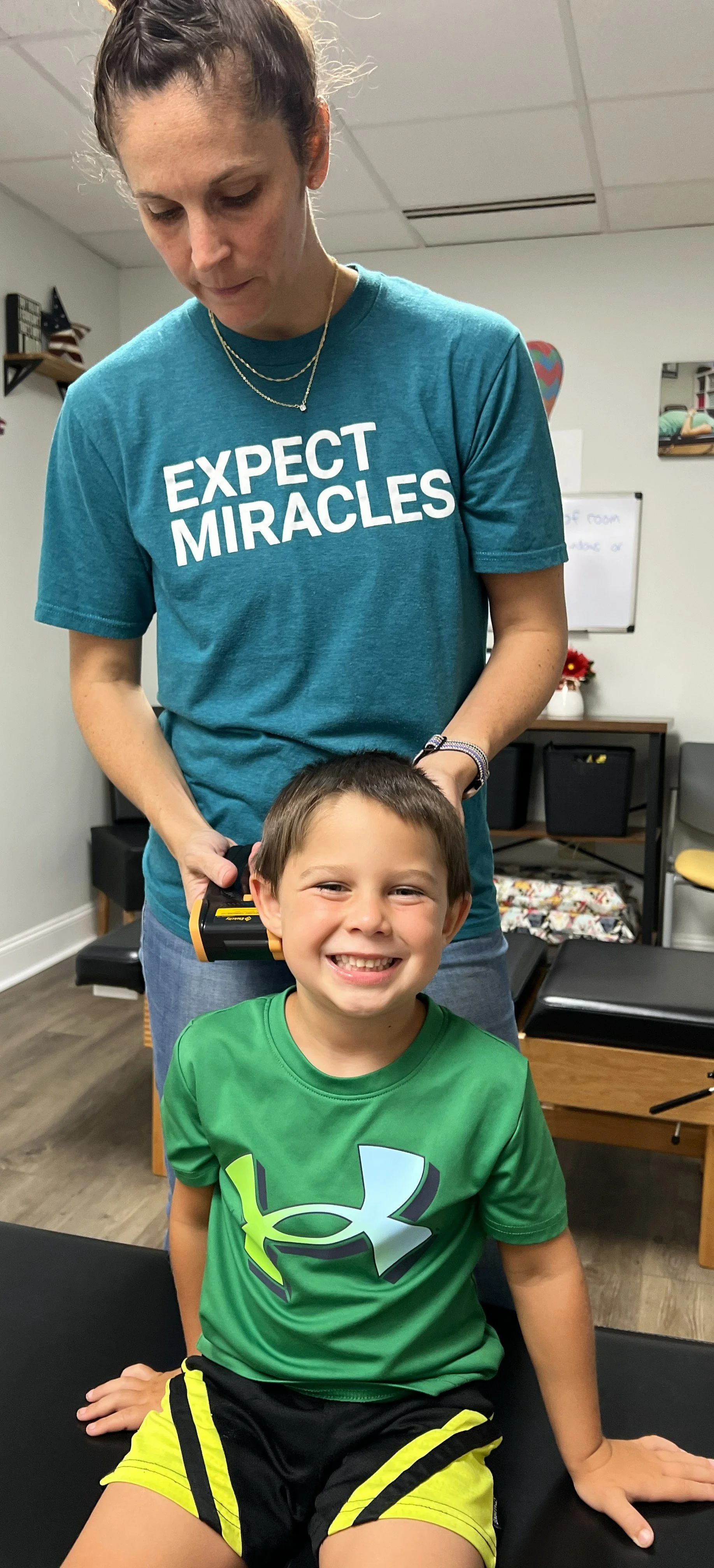
If you have a sensory-sensitive child, you probably know how quickly an ordinary moment can become overwhelming.
The vacuum turns on—and suddenly they're covering their ears.
The blender starts—and they're running out of the room.
A shirt tag feels unbearable. The restaurant is too loud. The birthday party is too crowded. The lights are too bright. Someone touches them unexpectedly, and they're done.
From the outside, the reaction can seem completely out of proportion to what just happened.
But from inside your child's nervous system?
It may feel very different.
At New Hope Chiropractic, we meet families who have slowly stopped doing things they once imagined enjoying together because they're constantly trying to anticipate what might overwhelm their child.
Restaurants become stressful.
Birthday parties are cut short.
Haircuts become battles.
Getting dressed takes forever.
Family gatherings require an escape plan.
And sometimes the hardest part isn't even the sensory challenge itself.
It's watching your child struggle in a world that doesn't seem to understand why everyday experiences can feel so intense.
Your Child Isn't Giving You a Hard Time—They're Having a Hard Time
One of the most important shifts we can make is separating behavior from what may be happening underneath the behavior.
Sound, light, touch, taste, smell, movement, body position—the nervous system is constantly receiving enormous amounts of sensory information.
The brain has to decide:
What's important?
What's safe?
What can I ignore?
What requires a response?
For most of us, that filtering happens automatically.
The refrigerator hums, but eventually we stop noticing it.
Our shirt touches our skin, but we don't spend the entire day thinking about it.
People talk in a restaurant while music plays in the background, and our brain can still focus on the person sitting across from us.
But for a sensory-sensitive child, that filtering process may work differently.
Imagine if someone turned up the volume on everything.
The lights feel brighter.
The sounds feel louder.
The clothing feels scratchier.
The room feels busier.
The unexpected touch feels bigger.
Eventually, the nervous system reaches its limit.
And what adults see as a meltdown may actually be the outward expression of a child who has become completely overwhelmed.
Sensory Processing Starts With the Nervous System
We sometimes describe the nervous system as the body's air traffic controller.
Every second, sensory information is flying in from every direction, and the brain has to receive it, organize it, prioritize it, and determine an appropriate response.
Your child isn't consciously doing this.
Their nervous system is.
That's why telling a sensory-overloaded child to "just calm down" often doesn't work.
By the time the meltdown happens, their thinking brain may already be struggling to manage the enormous amount of input coming in.
The behavior you see is the output.
We also want to understand what's happening with the neurological input and processing underneath it.
Claire's Story
Claire's family knows this experience well.
When Claire first came to New Hope Chiropractic, everyday life could be difficult for her nervous system to navigate.
Her family was seeing sensory challenges that affected how she interacted with her environment and other children. She was particularly sensitive to touch and could become overwhelmed quickly. At school, that sometimes showed up as biting, rough interactions, and a very low threshold for frustration.
From the outside, those moments could easily have been labeled as "behavior problems."
But her parents knew there was more to Claire than those difficult moments.
They wanted to understand why her system was becoming overwhelmed so easily.
As Claire continued under care, her family began noticing changes.
She became calmer.
Her sleep improved.
She was better able to regulate her emotions.
And as her ability to handle everyday stress improved, her family began seeing more of the sweet, connected little girl they knew was there all along.
Claire didn't need her personality changed.
She needed support for a nervous system that was working incredibly hard to process her world.
Her story is one reason we're so passionate about helping parents look beneath behavior and ask a different question:
What is this child's nervous system trying to tell us?
The Gas Pedal and Brake Pedal
Another way we explain this to parents is by imagining the autonomic nervous system as a car.
There is a gas pedal and a brake pedal.
The sympathetic nervous system is your gas pedal.
It helps activate the body when you need to respond to a challenge or threat. Heart rate changes. Muscles prepare for action. Alertness increases.
That's an incredibly important response.
The parasympathetic side helps with rest, digestion, recovery, connection, and returning toward a calmer baseline.
Your child needs both.
The goal isn't to eliminate the gas pedal.
The goal is flexibility—being able to activate when necessary and then recover when the stressor passes.
For some sensory kids, that recovery seems incredibly difficult.
Once the nervous system becomes overwhelmed, another sound, transition, texture, request, or unexpected event can feel like one more thing added to an already overloaded system.
Why Some Kids Seem Fine Until They're Suddenly NOT
Parents tell us this all the time:
"But they were completely fine five minutes ago!"
That's one of the confusing things about sensory overload.
Think of your child's capacity like a bucket.
Every demand adds something to it:
Poor sleep.
Getting dressed.
Bright lights.
Being rushed.
A noisy classroom.
Someone bumping into them.
Having to sit still.
A difficult assignment.
A change in plans.
Being hungry.
The lunchroom.
Social interactions.
By 3:00 PM, their bucket may be almost completely full.
Then you ask them to put their shoes away.
And they explode.
The shoes weren't necessarily the problem.
The bucket was already full.
Understanding that can completely change the way we respond to these kids.
Instead of only asking, "How do we stop this behavior?" we can begin asking:
"What is consuming so much of their nervous system's capacity?"
The "Perfect Storm": Why We Look at Your Child's Whole Story
When a sensory child comes into New Hope Chiropractic, we don't begin their story with today's meltdown.
We go all the way back.
We ask about pregnancy.
Birth.
Infancy.
Feeding.
Sleep.
Digestion.
Motor milestones.
Illness.
Injuries.
Stress.
Development.
Why?
Because the nervous system develops over time.
Some of the families we meet describe a history that may include:
A highly stressful pregnancy
A difficult or highly assisted birth
C-section, forceps, or vacuum delivery
Colic or reflux
Torticollis
Feeding or latching struggles
Chronic constipation
Difficulty sleeping
Frequent ear infections
Delayed milestones
A baby who startled easily or rarely settled
Sensory challenges that became more noticeable with age
We sometimes refer to this accumulation of stressors as the Perfect Storm.
That doesn't mean a C-section causes sensory processing disorder or that every colicky baby will later experience sensory challenges.
Human development is much more complicated than that.
But when we're trying to understand a child's current nervous-system patterns, their history matters.
Instead of treating each chapter as completely unrelated, we step back and look at the whole story.
Why OT, PT and Speech Therapy Still Matter
Many of the sensory families who come to us already have an incredible team.
Occupational therapy.
Physical therapy.
Speech therapy.
Feeding therapy.
Counseling.
Developmental specialists.
And we love that.
Neurologically focused chiropractic care isn't meant to replace those services.
Instead, we're asking a different question:
How well is the nervous system adapting and regulating underneath all of that work?
Therapies provide important input and help children build skills.
Our role is different. We assess patterns of neurological stress and neurospinal tension and determine whether chiropractic care may be an appropriate part of the child's broader support team.
Sometimes parents come to us because progress feels slower than expected.
That doesn't necessarily mean the therapy isn't working.
It may simply mean it's worth looking at another piece of the puzzle.
How Do We Actually Measure the Nervous System?
This is one of the things that makes our approach at New Hope Chiropractic different.
We don't want to guess.
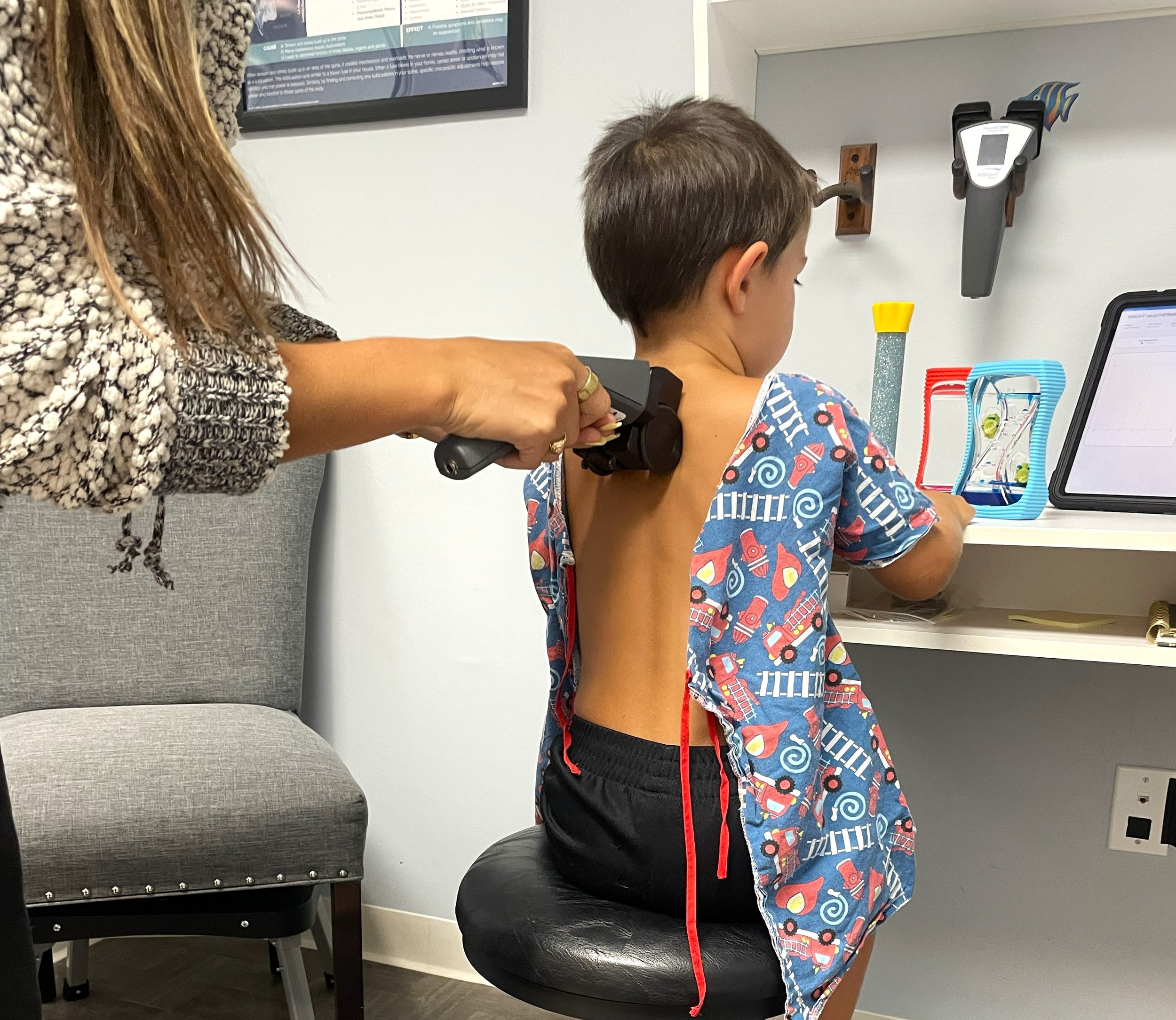
We use non-invasive Neurological INSiGHT Scans to gather objective information about patterns of nervous-system function.
The scans don't diagnose sensory processing disorder, autism, ADHD, anxiety, or another medical condition.
Instead, they help us evaluate things such as neurological stress, tension, coordination, and adaptability.
Heart Rate Variability (HRV)
HRV gives us information about autonomic adaptability—how effectively the body appears to shift between activation and recovery.
For the child who goes from 0 to 100 very quickly and has difficulty settling afterward, this can give us valuable information about how their system is handling stress.
NeuroSpinal EMG
Surface EMG measures electrical activity associated with the muscles supporting the spine.
It helps us see patterns of tension, energy use, and coordination.
This can be especially interesting in children who appear to be using enormous amounts of energy simply to organize their bodies throughout the day.
NeuroThermal Scan
The NeuroThermal Scan measures temperature patterns along the spine that are influenced in part by autonomic regulation.
When we put all three scans together with your child's history, examination, challenges, and goals, we get a much more complete picture than symptoms alone can provide.
What Does Neurologically Focused Chiropractic Care Look Like for a Sensory Child?
If our examination and scans indicate that chiropractic care is appropriate, we develop an individualized plan based on that child's needs.
Pediatric adjustments are gentle and specific.
And for sensory-sensitive children, how we deliver care matters tremendously.
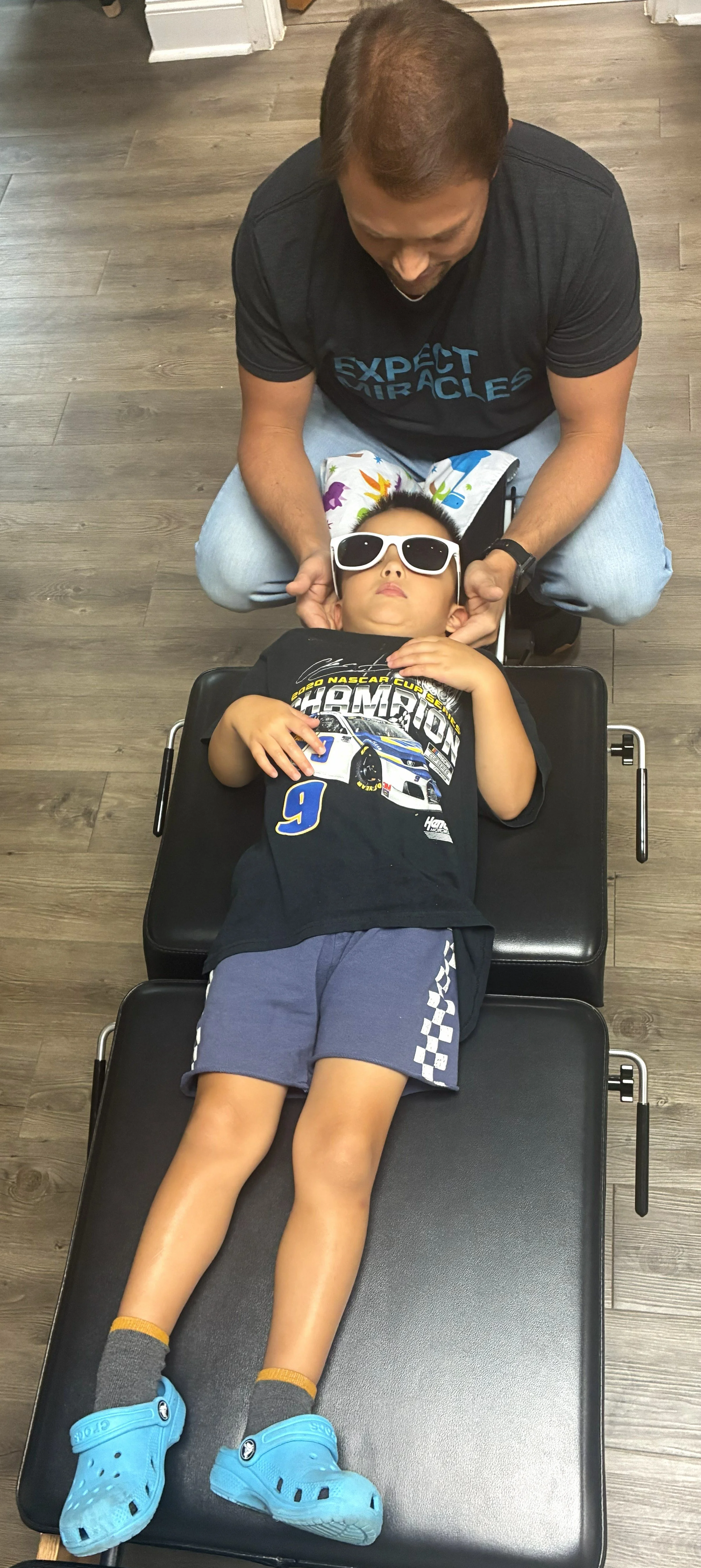
Some children walk right into our office and hop onto the table.
Others need time.
They may watch first.
Touch the equipment.
See an adjustment demonstrated on a stuffed animal.
Sit in Mom or Dad's lap.
Ask a hundred questions.
Or simply spend their first visits becoming comfortable with the environment.
That's okay.
We don't believe in forcing a sensory child through an experience simply because an adult wants it completed.
Trust matters.
Safety matters.
Connection matters.
We meet children where they are and work from there.
What Progress Can Look Like
Every child is different, and we never promise a specific outcome.
But as families track their child's progress, they may begin noticing changes in everyday life.
Maybe the vacuum isn't quite as overwhelming.
Maybe getting dressed becomes easier.
Maybe they recover from a meltdown more quickly.
Maybe transitions don't derail the entire afternoon.
Maybe sleep improves.
Maybe they can stay at the birthday party a little longer.
Maybe their teacher notices they're handling classroom demands differently.
Sometimes the biggest wins don't sound dramatic to anyone outside the family.
But to the parent who hasn't eaten an entire restaurant meal together in two years?
Sitting through dinner is huge.
To the family that has avoided birthday parties?
Staying for 45 minutes is huge.
To the child who used to spend an hour recovering from a transition?
Getting through it in 15 minutes is huge.
Those are the moments we're interested in.
Not changing who your child is.
Helping them have more capacity to experience their world.
Your Sensory Child Doesn't Need to Become Less Sensitive
Sensitivity isn't inherently bad.
Many sensory-sensitive children are incredibly observant, creative, empathetic, thoughtful, and aware of things other people completely miss.
The goal isn't to erase that.
The goal is helping their nervous system develop greater adaptability and resilience so everyday life doesn't constantly feel overwhelming.
Because your child deserves to experience the birthday party.
The restaurant.
The beach.
The classroom.
The family vacation.
And all those ordinary moments that become extraordinary when your family can finally enjoy them together.
Look Beneath the Behavior
If your child struggles with sensory overload, meltdowns, rigidity, transitions, sleep, emotional regulation, or feeling overwhelmed by everyday environments, there may be several pieces to explore.
Sensory processing can be complex, and appropriate medical, developmental, therapeutic, and educational support remains important.
But we believe the nervous system deserves to be part of that conversation.
At New Hope Chiropractic in Charleston, South Carolina, we use Neurological INSiGHT Scans, a detailed history, and gentle neurologically focused chiropractic care to help families better understand patterns of neurological stress and adaptability.
If you've spent years asking:
"Why does everything seem so much harder for my child?"
Maybe it's time to ask:
"What is their nervous system experiencing?"
We'd love to help you take a closer look.
Related Articles
Sensory Overload in Children: What's Really Happening in the Nervous System
Understanding Emotional Dysregulation in Kids: A Neurological Approach
Proprioception: The Missing Piece in Your Child's Development Puzzle
Understanding the Connection Between the Vagus Nerve and Your Child's Neurological Challenges
The Health Test Your Pediatrician Isn't Running (But Should Be)
