
You've spent months, maybe even years, trying to help your child.
The meltdowns. The bedtime battles. The sensory overwhelm. The constant worry about whether they're getting the support they need.
You've researched, advocated, scheduled appointments, driven to therapies, changed routines, and done everything you can to help your child feel and function better.
And somewhere along the way, you stopped paying attention to how YOU were doing.
You're exhausted, but you keep going.
You're overwhelmed, but everyone still needs you.
You're running on empty, but you tell yourself you'll focus on your own health when things finally settle down.
Sound familiar?
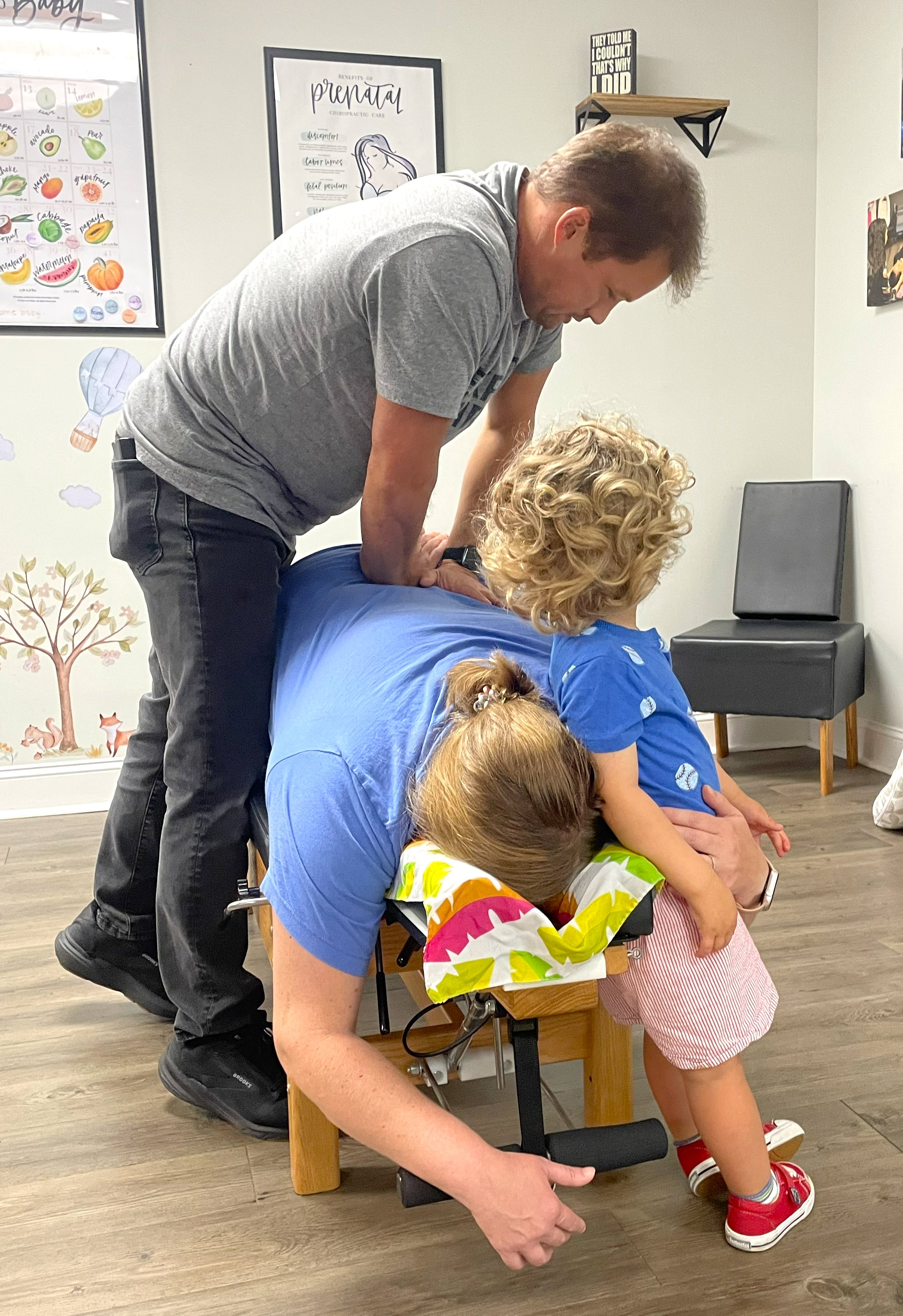
At New Hope Chiropractic, we see this every day.
Parents walk through our doors because they're concerned about their children. But as we get to know their families, we often discover that Mom and Dad are carrying an incredible amount of stress themselves.
And that's why we're so passionate about caring for the entire family.
Because your nervous system matters, too. And taking care of yourself is an important part of taking care of your family.
When Everyone Else Comes First
Think about what an ordinary day looks like for a busy parent.
You're getting everyone dressed, fed, and out the door. You're managing school schedules, work responsibilities, appointments, meals, and bedtime routines.
And when your child has additional sensory, emotional, behavioral, or developmental challenges, those everyday responsibilities can become even more demanding.
You're anticipating meltdowns before they happen.
You're carefully planning transitions.
You're constantly thinking three steps ahead to help your child navigate their day.
By the time the house finally gets quiet, your body is exhausted, but your mind is still running.
You lie in bed thinking about tomorrow's schedule, the appointment you need to make, or whether you're doing enough.
Your body is tired, but your brain hasn't gotten the message that the day is over.
This is where understanding your nervous system becomes incredibly valuable.
Your Nervous System Has a Gas Pedal and a Brake Pedal
At New Hope, we often explain the autonomic nervous system using a simple analogy.
Your body has a gas pedal and a brake pedal.
The sympathetic nervous system is your gas pedal. It helps you respond to stress, challenges, and situations that require immediate attention.
The parasympathetic nervous system supports functions associated with rest, digestion, and recovery. It's the brake pedal that helps your body settle after a stressful experience.
Both systems are essential.
You need your gas pedal when you're rushing to get everyone out the door, responding to an emergency, or managing a difficult situation.
But you also need your brake pedal.
You need to be able to recover after a demanding day, settle into sleep, and return to a calmer state once the immediate challenge has passed.
The problem isn't experiencing stress.
The problem is when your days are so consistently demanding that your body rarely gets the opportunity to recover.
Chronic stress can affect sleep, concentration, muscle tension, digestion, mood, and overall well-being.
And when you're already exhausted, even the smallest additional challenge can feel enormous.
What Is Co-Regulation, and Why Does It Matter?
Have you ever noticed how quickly your child's emotions can affect your own?
Your child starts crying, and you feel your shoulders tighten.
They're becoming overwhelmed, and you notice your own heart beating faster.
They're struggling to calm down, and suddenly you feel overwhelmed, too.
Now think about the opposite.
Your child is upset, and you sit beside them. You speak calmly, offer reassurance, and help them work through what they're feeling.
Gradually, the intensity begins to decrease.
This is part of a process called co-regulation.
Co-regulation happens when a child receives emotional and behavioral support from a trusted caregiver while developing their own ability to manage emotions and responses.
Children learn regulation skills through repeated experiences of connection, reassurance, predictable routines, and supportive relationships.
And while this is especially important during infancy and early childhood, children of all ages benefit from having adults who help them navigate difficult emotions.
Here's what we want every parent to understand:
You don't have to be perfectly calm to help your child learn to regulate.
You're human. You have difficult days, too.
What matters is creating a relationship where your child feels supported, where you can reconnect after hard moments, and where both of you have opportunities to recover.
And that becomes easier when parents have support for their own well-being.
Why Your Own Stress Deserves Attention
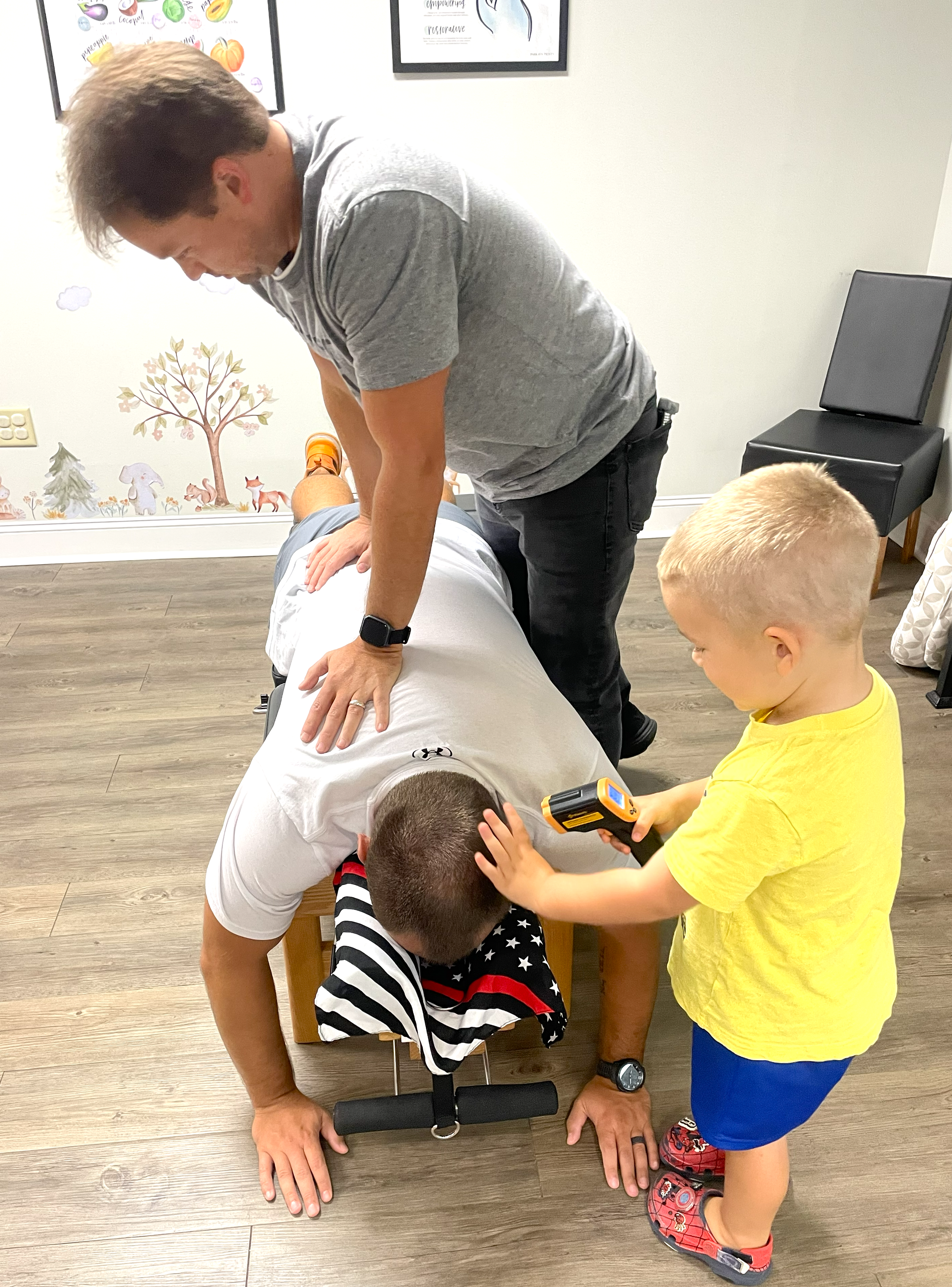
For many moms, stress has become such a normal part of life that they don't even recognize how much they're carrying.
You wake up tired.
Your shoulders are constantly tense.
Your patience feels shorter than it used to.
You struggle to turn your brain off at night.
You keep pushing through because there's always something else that needs to get done.
Over time, ongoing stress can influence how you feel physically and emotionally.
It can also make it harder to access the patience, attention, and flexibility you want to bring into challenging parenting moments.
That's not a reflection of how much you love your children.
It's a reminder that parents have physical and emotional needs, too.
And those needs deserve attention before you reach the point of complete exhaustion.
Your Vagus Nerve and the Importance of Recovery
One of the structures involved in your body's recovery processes is the vagus nerve.
The vagus nerve is a major component of the parasympathetic nervous system. It helps regulate functions such as heart rate and digestion and participates in communication between the brain and internal organs.
When we talk about nervous-system regulation at New Hope, we're interested in the body's ability to respond to demands and recover afterward.
This isn't about eliminating stress or keeping your body in a constant state of relaxation.
A healthy nervous system needs flexibility.
It needs to respond when life gets demanding and settle when the challenge has passed.
Supporting that flexibility involves multiple factors, including adequate sleep, movement, nutrition, emotional connection, and opportunities for recovery.
For parents, making room for those things can feel difficult.
But caring for your health isn't something that has to wait until your children are older or life becomes less busy.
It's worth prioritizing now.
Why We Look at Neurological Function in Parents, Too
At New Hope Chiropractic, we use Neurological INSiGHT Scans as part of our evaluation process for both children and adults.
These noninvasive assessments give us additional information about certain aspects of neurological and neurospinal function.
Our HRV scan measures heart rate variability, which provides information about autonomic regulation and physiological responses associated with stress and recovery.
Our NeuroSpinal EMG scan evaluates muscle electrical activity along the spine, helping us identify patterns of muscular tension.
Our NeuroThermal scan measures temperature patterns along the spine, which can be influenced by autonomic activity.
These measurements can contribute to our overall assessment, but they don't diagnose chronic stress, mental health conditions, or dysautonomia. They also cannot tell us whether a parent's nervous system is causing a child's behavioral or developmental challenges.
We consider the results alongside your health history, examination findings, and individual wellness goals.
For parents who have spent years prioritizing their children's appointments, this can be an opportunity to turn some attention toward their own health.
Because understanding how you're functioning matters, too.
Why We Love Caring for the Entire Family
One of our favorite things about New Hope Chiropractic is seeing families make wellness a shared priority.
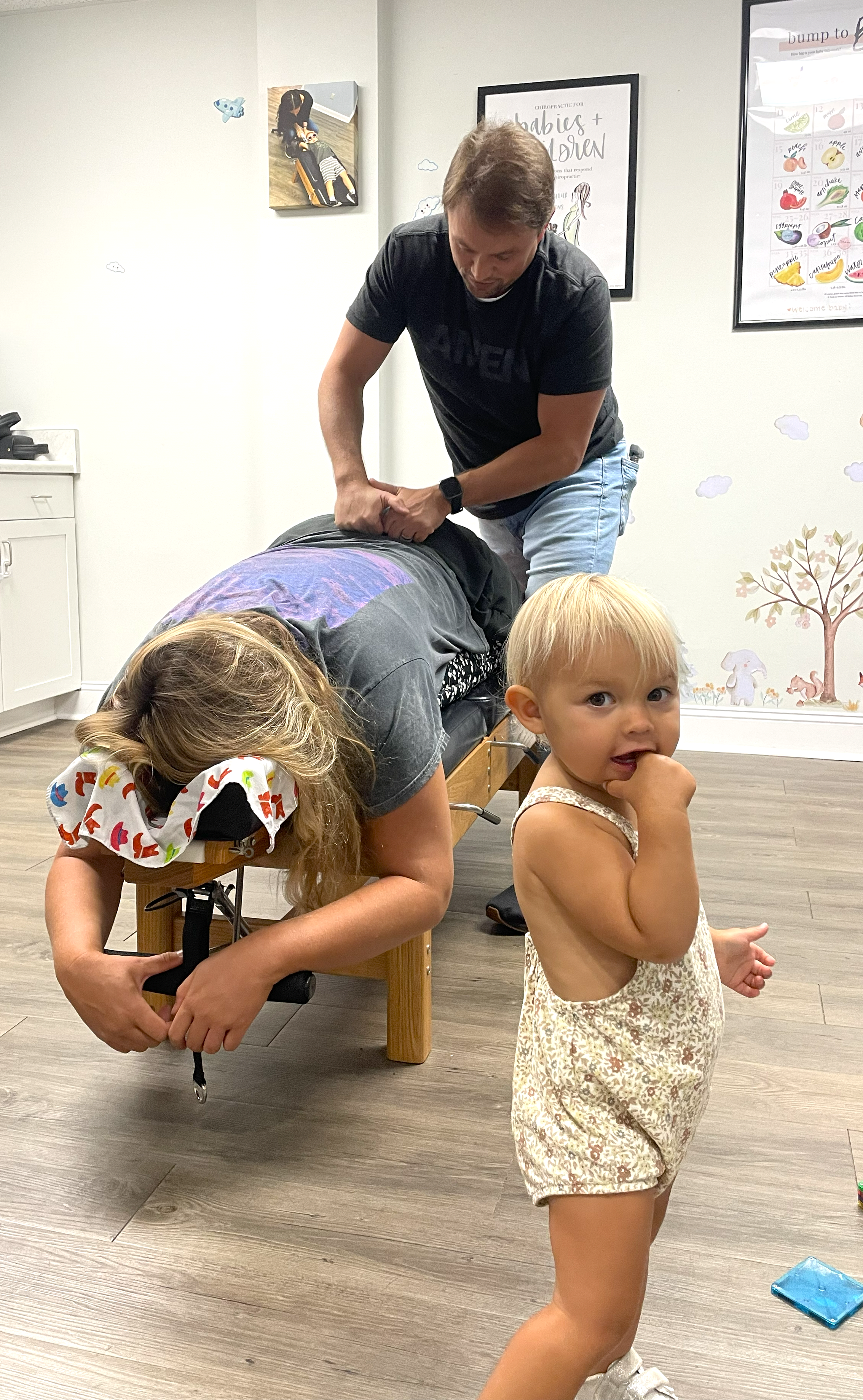
We have children who come in for their appointments while Mom and Dad are also taking time to address their own health.
We have parents who originally found our office while looking for support for their child and later realized they wanted to focus on their own physical well-being.
And we have families who value having a consistent healthcare team that knows their history and understands their individual goals.
When appropriate, Dr. Angela and Dr. Chris provide gentle, individualized chiropractic care focused on neurospinal and musculoskeletal function.
The care a parent receives is different from the care a child receives because their bodies, histories, examination findings, and goals are different.
Our goal isn't to put everyone on the same care plan.
It's to recognize that every member of the family deserves individualized attention.
Chiropractic care does not replace medical or mental health treatment, and it has not been established as a treatment for parenting stress, anxiety disorders, or childhood behavioral conditions.
But for families who choose chiropractic wellness care, we want it to be a thoughtful part of their broader approach to health.
Five Ways to Support Your Own Nervous System as a Parent
You don't need a perfect schedule or hours of free time to begin taking better care of yourself.
Start with small, consistent habits that help your body and mind recover.
1. Create Moments of Recovery Throughout Your Day
Recovery doesn't have to wait until bedtime.
Take a short walk. Step outside for fresh air. Sit quietly for a few minutes. Give yourself a break between demanding activities.
Small moments of rest can help interrupt the feeling that you're constantly rushing from one responsibility to the next.
2. Practice Co-Regulation Without Expecting Perfection
When your child becomes overwhelmed, focus on connection before correction.
Lower your voice. Slow your pace. Offer reassurance.
And if you become frustrated, remember that repairing the interaction afterward is valuable, too.
Children learn from seeing adults navigate emotions, acknowledge mistakes, and reconnect.
3. Protect Your Sleep
Sleep plays an important role in emotional regulation, attention, and physical recovery.
Build a consistent bedtime routine where possible and look for opportunities to reduce the demands that interfere with rest.
If persistent fatigue or sleep difficulties continue, talk with your healthcare provider.
4. Ask for Support
You were never meant to manage every responsibility alone.
Whether that means asking your spouse to take over bedtime, connecting with another parent, seeking counseling, or getting help with everyday tasks, support matters.
Taking care of yourself includes allowing other people to help carry the load.
5. Make Your Own Health a Priority
Schedule the appointments you've been putting off.
Address the physical discomfort you've been ignoring.
Pay attention to your sleep, energy, movement, and emotional well-being.
And if you're interested in understanding more about your neurospinal health, our team at New Hope would love to help you explore whether a chiropractic evaluation is appropriate.
The Whole Family Deserves to Thrive
At New Hope, we believe wellness shouldn't revolve around one person while everyone else runs on empty.
Your child's health matters.
Your spouse's health matters.
And your health matters, too.
When parents feel supported, they have more opportunities to show up for their families with the energy, patience, and connection they want to bring into everyday life.
That doesn't mean your child's progress depends on you being perfectly regulated.
It means that supporting your own well-being is valuable for you and for the relationships that matter most.
So if you've spent months or years making sure everyone else gets the care they need, consider this your reminder:
You deserve to be on the list, too.
At New Hope Chiropractic in Charleston, South Carolina, Dr. Angela and Dr. Chris are passionate about helping families take a proactive approach to neurological and neurospinal wellness.
Whether you're bringing in your child, prioritizing your own health, or exploring care for the entire family, we'd love to walk alongside you.
Schedule a Consultation and Neurological INSiGHT Scans at New Hope Chiropractic
Because taking care of your family includes taking care of you.
Five Related Articles
Why Your Whole Family Should Get Their Nervous System Checked
You Don't Have to Feel Exhausted All the Time
An Exhausted Mom's Survival Guide: Finding Balance, Health, and Hope at New Hope Chiropractic
5 Simple Ways to Boost Your Energy as a Parent
From Chaos to Calm: 3 Health Hacks to Manage Mom Stress and Tension
