
You can see it in their eyes.
Your child has something to tell you. They know exactly what they want to communicate. They're trying so hard to get the words out.
But their mouth isn't cooperating.
You encourage them to try again. You slow things down. You repeat the word and give them time.
And you watch the frustration build because your child has so much to say, but getting those words out is incredibly difficult.
You've been to the speech evaluations. You've practiced the sounds, worked through the exercises, and celebrated every new word.
Yet communication continues to be a daily struggle.
For some families, these challenges lead to a diagnosis of Childhood Apraxia of Speech (CAS).
And while that diagnosis provides an explanation, it often leaves parents wondering:
Why is speaking so difficult when my child understands so much?
Why can they say a word one day but struggle with it the next?
And what else can we do to support their development?
At New Hope Chiropractic, we believe that understanding a child's challenges begins with understanding how their nervous system functions.
Because speech isn't simply about the mouth. It's about the brain's ability to plan, coordinate, and communicate with the muscles responsible for producing words.
And that connection deserves a closer look.
Childhood Apraxia of Speech Is a Motor Planning Challenge
Here's something every parent of a child with apraxia deserves to understand.
Your child's difficulty speaking isn't a reflection of how hard they're trying.
Childhood Apraxia of Speech is a neurological motor-speech disorder that affects the brain's ability to plan and coordinate the movements required for speech.
Think about everything that has to happen for your child to say one simple word.
Their brain must organize a precise sequence of movements involving the lips, tongue, jaw, and breathing muscles.
Those movements have to happen in the correct order, with the right timing and coordination.
For most children, these patterns become increasingly automatic as speech develops.
For a child with apraxia, the planning and sequencing process is much more challenging.
That's why you may notice your child:
Saying the same word differently each time.
Struggling more with longer words or phrases.
Having difficulty moving smoothly between sounds.
Appearing to search for the correct mouth movements.
Becoming frustrated when others don't understand them.
Understanding far more than they're able to express verbally.
The challenge is in coordinating the movements necessary to produce speech.
And that brings us to something we talk about every day at New Hope: the incredible role of the nervous system in coordinating how the body functions.
Speech Is a Nervous System Function
We often think about speech as something that happens in the mouth.
But long before a word comes out, an extraordinary amount of neurological activity has already taken place.
The brain must plan the movement, organize the sequence, coordinate the muscles, and use sensory feedback to refine the result.
All of this requires communication between different parts of the nervous system.
And speech doesn't happen in isolation.
The nervous system also coordinates breathing, posture, muscle tone, movement, sensory processing, and the body's responses to its environment.
That's why some children experiencing speech challenges also have difficulties with other aspects of development.
You may notice challenges with body awareness, coordination, sensory sensitivities, emotional regulation, or motor milestones.
At New Hope, these are important pieces of a child's overall neurological picture.
We want to understand how the entire child is functioning, not focus exclusively on the symptom that brought them through our doors.
Why We Start With Your Child's Entire Story
When a family comes into New Hope Chiropractic, one of the first things we do is sit down and learn their child's history.
And we start long before the first speech concern.
We talk about pregnancy.
We talk about birth.
We talk about feeding, sleeping, movement, development, and the challenges parents noticed along the way.
Why?
Because the nervous system begins developing before birth, and early experiences are part of understanding a child's overall development.
We ask about experiences such as:
High levels of stress during pregnancy.
Long or difficult labor.
Breech positioning or assisted delivery.
Cesarean birth.
Early feeding or latch difficulties.
Colic, reflux, or digestive struggles.
Torticollis or persistent muscle tension.
Delayed or unusual movement patterns.
Sensory sensitivities and sleep challenges.
Each piece helps us better understand the child's physical and developmental history.
We also recognize that childhood apraxia has different underlying causes, including neurological and genetic factors.
The reason we explore this history is to build a complete picture of the child's needs, strengths, and challenges.
Because the more we understand about a child's story, the more individualized our approach can be.
Understanding the Perfect Storm
At New Hope Chiropractic, we use the Perfect Storm framework to help parents understand how different stressors can accumulate throughout early development.
We look at three important stages.
1. Prenatal Stress and Development
The nervous system begins forming during pregnancy, making prenatal development an incredibly important part of a child's story.
Maternal health, stress physiology, nutrition, and the prenatal environment all contribute to the conditions in which a baby develops.
Understanding this stage gives us valuable context when reviewing a child's developmental history.
2. Birth and Early Physical Stress
Birth is a significant physical experience for both mother and baby.
We pay close attention to birth history because it can provide information about early movement, muscle tension, feeding, positioning, and physical development.
These details help guide our neurological and neurospinal evaluation.
3. Early Childhood Stress and Developmental Challenges
As children grow, their nervous systems are constantly adapting to new experiences.
Sleep disruptions, illnesses, sensory demands, changes in routine, and developmental challenges can all affect how children experience and respond to their environment.
For children who are already working hard to develop communication and motor skills, understanding their broader physical and developmental needs becomes especially valuable.
The Perfect Storm helps us look at the entire journey instead of beginning and ending with one diagnosis.
The Connection Between Neurospinal Function and Development
One of the areas we focus on at New Hope Chiropractic is the relationship between spinal movement, sensory information, and neurological function.
Your spine does much more than support your body.
Muscles and joints throughout the spine continuously send sensory information to the central nervous system.
That information contributes to the brain's understanding of body position, movement, and coordination.
When we evaluate neurospinal function, we're interested in how the spine is moving, where muscular tension is present, and how the body is adapting to physical demands.
In chiropractic, altered patterns of spinal movement and function are often discussed using the term subluxation.
Our doctors assess these patterns as part of a broader evaluation of neurospinal health.
For children with developmental challenges, we pay attention to the entire physical picture, including posture, movement, muscular tension, and overall comfort.
Because movement, sensory information, and neurological coordination are deeply connected.
Why We Also Pay Attention to the Vagus Nerve
Another important part of nervous-system function is the autonomic nervous system.
This system helps regulate many of the body's automatic processes, including heart rate, digestion, and responses to stress.
At New Hope, we often explain this using the gas pedal and brake pedal analogy.
The sympathetic nervous system is the gas pedal. It helps the body respond to challenges and demands.
The parasympathetic nervous system supports rest, digestion, and recovery.
The vagus nerve is a major component of that parasympathetic system.
When a child is navigating ongoing sleep difficulties, sensory overwhelm, digestive challenges, or heightened responses to everyday experiences, understanding their overall regulation becomes an important part of their wellness picture.
And for children with communication difficulties, these additional challenges can make daily life even more demanding.
A child who is exhausted, overwhelmed, or uncomfortable has more to manage while also working on speech and communication.
Supporting a child's overall well-being matters because every part of their day matters.
Why Speech Therapy and Whole-Child Support Belong Together
Speech therapy plays an incredibly important role in helping children with apraxia develop communication skills.
A speech-language pathologist who specializes in motor-speech disorders can help children practice the precise movement patterns necessary for producing speech.
Through structured repetition, cueing, and motor-learning strategies, children work toward developing more consistent and coordinated speech movements.
And at New Hope, we love seeing families build a team around their children.
Speech-language pathologists focus on speech and communication.
Occupational therapists can address sensory processing, daily activities, and motor skills.
Pediatricians and developmental specialists help families understand medical and developmental needs.
And our team focuses on evaluating neurological and neurospinal wellness through our chiropractic approach.
Every professional brings a different perspective, and every child deserves care that recognizes their individual needs.
Our goal is to help families feel informed, empowered, and supported as they navigate their child's development.
How Neurological INSiGHT Scans Help Us Understand Your Child
One of the things that makes New Hope Chiropractic different is our use of Neurological INSiGHT Scans.
We don't want to rely exclusively on how a child appears on the outside.
We want objective information that helps us understand important aspects of their neurospinal and physiological function.
That's why we use three different assessments.
Heart Rate Variability (HRV)
Our HRV scan measures variations in the time between heartbeats.
Heart rate variability provides information about autonomic regulation and the body's physiological responses associated with stress and recovery.
We use this information as one part of understanding a child's overall wellness picture.
NeuroSpinal EMG
Our NeuroSpinal EMG scan measures electrical activity in muscles along the spine.
This helps us evaluate patterns of muscular activity and tension that contribute to our understanding of neurospinal function.
NeuroThermal Scan
Our NeuroThermal scan measures temperature patterns along the spine.
These measurements provide another piece of information for our doctors to consider during the evaluation.
Together, these assessments help us build a more detailed picture of the child's neurological and neurospinal wellness.
We combine that information with their history, examination findings, and the family's goals to develop an individualized chiropractic care plan when appropriate.
Because every child is different, and their care should reflect that.
Five Ways to Support Your Child's Communication and Development
There are meaningful things you can do every day to support a child navigating apraxia and other developmental challenges.
1. Give Them Time to Communicate
When your child is working to express themselves, slow down and give them space.
Let them know you're listening.
Their message matters, even when the words take longer to come out.
2. Celebrate Every Form of Communication
Words are important, but communication is so much bigger than speech.
Gestures, facial expressions, signs, pictures, and communication devices all help children express themselves.
Celebrate the connection and effort behind every interaction.
3. Make Practice Meaningful
Work with your child's speech therapist to identify specific words and movements to practice at home.
Build those opportunities into familiar activities and routines.
And remember that your child also needs conversations and playtime that aren't focused on correcting speech.
4. Pay Attention to Their Overall Needs
Notice how your child responds to sleep disruptions, busy environments, transitions, and physically demanding days.
Understanding their sensory and emotional needs can help you create a more supportive daily environment.
5. Build a Team That Sees the Whole Child
Your child's needs extend beyond a single diagnosis.
Find professionals who listen to your concerns, recognize your child's strengths, and work with you toward meaningful goals.
You deserve a team that sees the incredible child behind the challenges.
Your Child Has So Much More to Say
One of the hardest parts of watching your child struggle with speech is knowing how much they want to communicate.
You see their excitement.
You recognize their frustration.
You celebrate the sounds, words, and moments of connection that other families may take for granted.
And through it all, you keep showing up.
At New Hope Chiropractic, we believe children deserve to be understood as whole people with unique strengths, challenges, and developmental journeys.
We are passionate about helping parents understand neurological and neurospinal function and making individualized wellness care accessible to the families we serve.
Your child is so much more than their diagnosis.
And their voice matters, whether it comes through words, gestures, expressions, or the many other ways they connect with the world.
Take the Next Step With New Hope Chiropractic
If you've been searching for a team that takes time to understand your child's entire story, we'd love to meet your family.
At New Hope Chiropractic in Charleston, South Carolina, Dr. Angela and Dr. Chris provide neurologically focused chiropractic evaluations for children and families.
Your first visit includes a detailed consultation and Neurological INSiGHT Scans.
At your second visit, we'll walk you through the findings, explain what we're seeing, discuss your family's goals, and outline personalized care recommendations.
Your child deserves to be seen, heard, and understood. And we're here to walk alongside your family.
Schedule Your Child's Neurological Consultation at New Hope Chiropractic
One of the first things we do when a family comes into New Hope Chiropractic is take time to understand their child's history.
We don't begin with the diagnosis alone.
We ask questions about pregnancy, birth, feeding, sleep, early movement, sensory sensitivities, and developmental milestones.
Why?
Because these experiences help us understand the whole child.
For example, a child may have experienced early feeding difficulties, torticollis, unusual muscle tension, delayed motor milestones, or challenges with sensory processing.
Those details can identify additional concerns that deserve evaluation or support.
However, a difficult labor, cesarean delivery, reflux, or antibiotic use does not establish the cause of childhood apraxia of speech.
The causes of CAS are not fully understood in many children. Some cases are associated with genetic conditions, neurological differences, or other developmental disorders.
Understanding a child's history is valuable, but it shouldn't lead us to assume that one particular birth experience or early illness explains their speech diagnosis.
The goal is to recognize the full range of your child's needs so their care team can support them appropriately.
Understanding the Perfect Storm: Looking at the Whole Child
At New Hope Chiropractic, we often use the Perfect Storm framework to help parents think about how different stressors and developmental experiences can overlap throughout childhood.
This includes considering prenatal health, birth experiences, early development, sleep, sensory challenges, and the physical demands a child experiences as they grow.
For a child with speech challenges, this broader perspective can help identify concerns beyond speech itself.
Perhaps your child also struggles with sleep.
Perhaps they become overwhelmed in noisy environments.
Perhaps they have difficulty with transitions, body awareness, or motor coordination.
Or perhaps their speech difficulties are the primary concern, and other areas of development are progressing well.
Every child has a different story.
The Perfect Storm is an educational framework rather than an established explanation for the cause of CAS. It does not replace genetic, neurological, developmental, or speech-language evaluations.
But it reinforces an important principle in our office:
Your child deserves individualized attention, not assumptions based on a diagnosis.
Why Speech Therapy Is So Important for Childhood Apraxia
If your child has been diagnosed with apraxia, working with a speech-language pathologist who has experience treating motor-speech disorders is essential.
Apraxia therapy is different from simply practicing vocabulary or encouraging a child to repeat words.
Effective treatment focuses on helping the brain learn and refine the movements required for speech.
Depending on the child's needs, therapy may involve repeated practice of functional words, visual and tactile cues, attention to movement transitions, and structured motor-learning techniques.
Approaches such as Dynamic Temporal and Tactile Cueing (DTTC) and other motor-based interventions may be appropriate depending on the child's age, abilities, and specific speech patterns.
Some children also benefit from augmentative and alternative communication (AAC), including picture systems, gestures, or speech-generating devices.
AAC doesn't mean giving up on verbal speech.
It gives your child additional ways to communicate while they continue developing speech skills.
That ability to communicate matters for relationships, confidence, learning, and emotional well-being.
And when a child has additional sensory, motor, or developmental needs, collaboration with occupational therapists, physical therapists, pediatricians, and other specialists can provide valuable support.
Where Neurologically Focused Chiropractic Care Fits
At New Hope Chiropractic, our approach is centered on evaluating neurological and neurospinal function and providing individualized chiropractic care when appropriate.
For children with developmental challenges, we take time to understand their complete history, current concerns, and overall wellness goals.
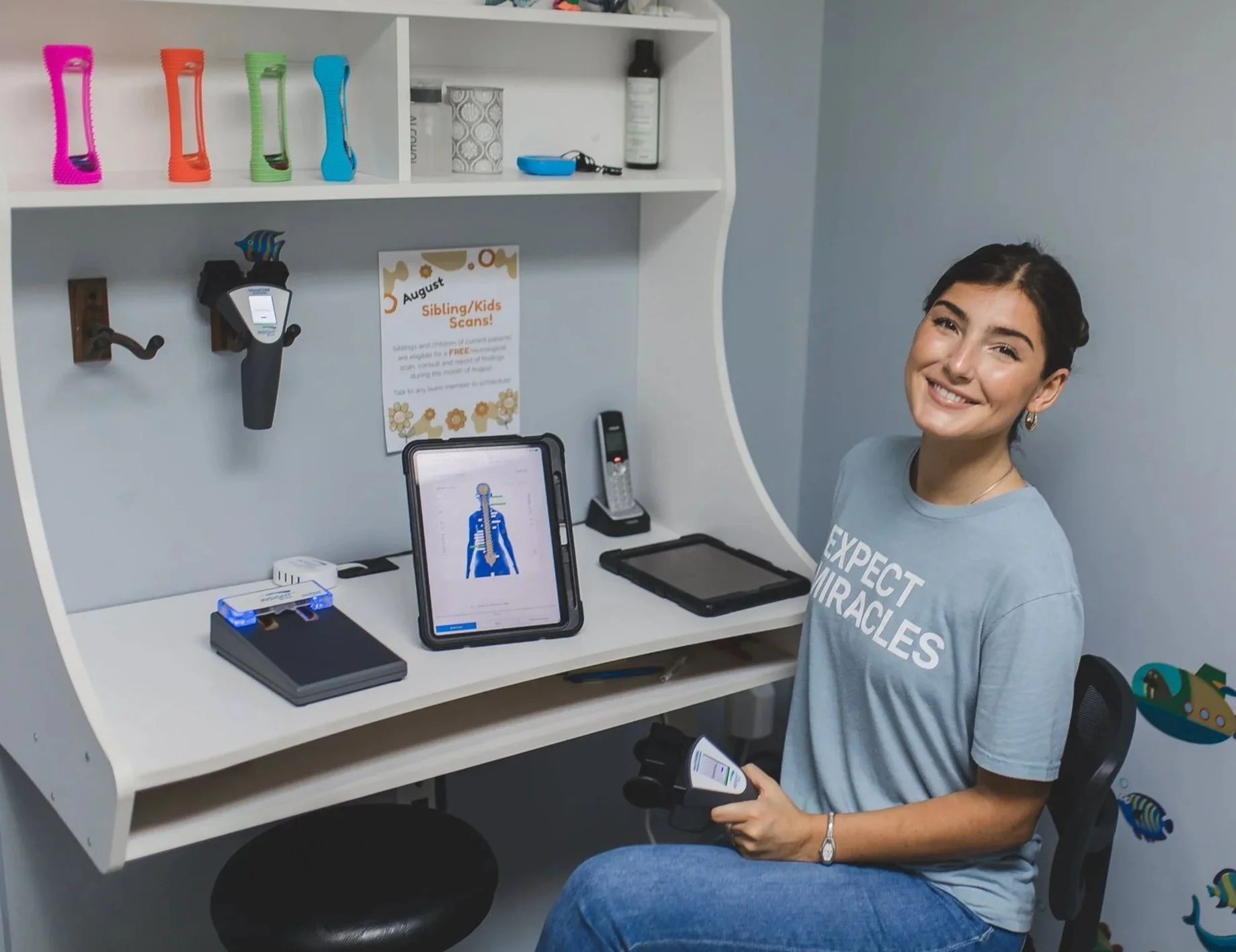
We also use Neurological INSiGHT Scans as part of our evaluation process.
Our HRV scan provides information about autonomic regulation and physiological stress patterns.
Our NeuroSpinal EMG scan measures muscle electrical activity along the spine and helps us assess patterns of muscular tension.
Our NeuroThermal scan evaluates temperature patterns along the spine.
These tools provide additional information about aspects of physiological and neurospinal function, but they do not diagnose childhood apraxia of speech, identify abnormalities in the brain's speech-planning networks, or determine the cause of a speech disorder.
When chiropractic care is appropriate, our doctors use gentle, individualized adjustments focused on neurospinal function.
Chiropractic care has not been established as a treatment for CAS, and we do not present it as a replacement for speech therapy.
Instead, our goal is to work alongside the other professionals supporting your child's health and development.
We want families to feel heard, supported, and informed as they navigate their child's individual needs.
Five Ways to Support a Child With Apraxia at Home
While your child's speech-language pathologist will guide their individualized treatment, there are meaningful ways you can support communication throughout everyday life.
1. Give Your Child Time to Communicate
When your child is trying to tell you something, resist the urge to immediately finish their sentence.
Allow extra processing and response time.
Show them through your attention and body language that what they have to say matters.
2. Celebrate Communication, Not Perfection
Every attempt to communicate deserves encouragement.
Whether your child uses words, gestures, signs, pictures, or a communication device, recognize the message they're sharing.
The goal is meaningful communication, not perfect pronunciation in every interaction.
3. Follow Your Speech Therapist's Home Practice Plan
Children with apraxia often benefit from structured, repeated motor-speech practice.
But more practice isn't automatically better if the child is repeatedly rehearsing incorrect movements.
Ask your speech-language pathologist which words, cues, and activities to practice at home and how frequently to practice them.
4. Reduce Pressure During Everyday Conversations
Your child shouldn't feel that every interaction is a speech test.
Make time for conversations, reading, play, and connection without constantly asking them to repeat or correct words.
Communication should remain an enjoyable part of family life.
5. Support the Whole Child
Pay attention to sleep, physical activity, sensory needs, emotional well-being, and opportunities for play.
If your child struggles with other developmental or physical concerns, discuss them with the appropriate healthcare professionals.
Supporting overall health and development is valuable even when it doesn't directly change the underlying motor-speech disorder.
Your Child Has So Much to Say
One of the hardest parts of parenting a child with apraxia is knowing how much they want to communicate while watching them work so hard to get their words out.
But their voice is so much bigger than the sounds they can produce today.
It's in their expressions, their laughter, their gestures, their excitement, and the way they connect with the people they love.
Their communication deserves to be recognized and supported in every form.
At New Hope Chiropractic in Charleston, South Carolina, Dr. Angela and Dr. Chris are passionate about helping families better understand their children's neurological and neurospinal wellness.
If your child is experiencing speech challenges alongside concerns about physical tension, sensory processing, sleep, or overall development, we'd love to learn more about their story and discuss whether a chiropractic evaluation is appropriate.
Your child is more than a diagnosis. And every part of their story matters.
Schedule a Consultation and Neurological INSiGHT Scans at New Hope Chiropractic
Related Articles
Understanding and Addressing Speech Delay in Children
Navigating Developmental Delays with Confidence
Proprioception: The Missing Piece in Your Child's Development Puzzle
Hope for Developmental Delays: Finding Success Outside Standard Therapies
Understanding Your Child's Stimming: A Key to Supporting Their Nervous System
