
Why Your Stress Reaches Your Baby Before Birth: The Pregnancy Nervous System Connection
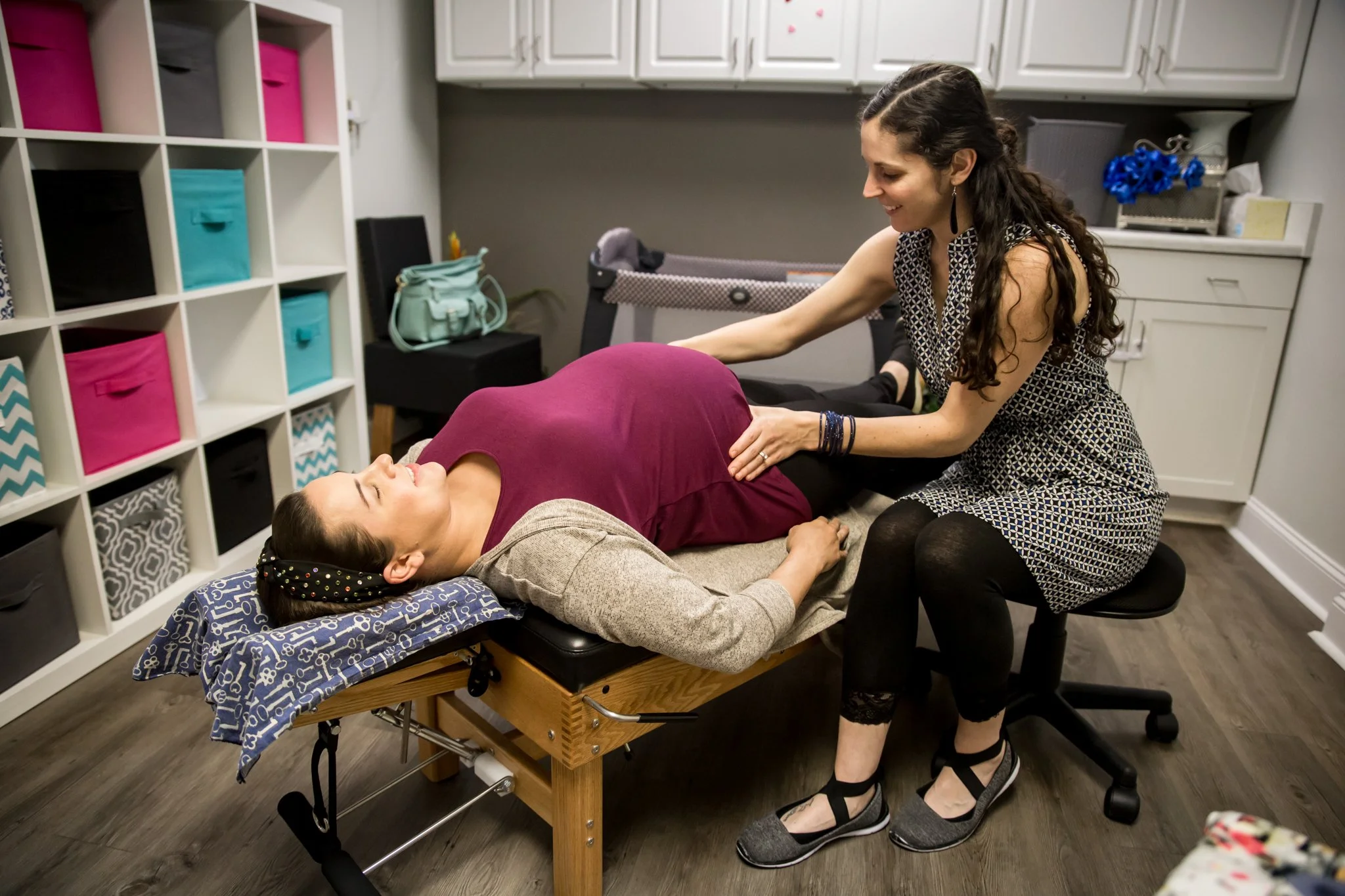
Pregnancy has a way of making you think about health differently.
Suddenly you're paying attention to what you're eating, how you're sleeping, what medications you're taking, how your baby is growing, and what every number on your lab work means. Prenatal appointments track your baby's growth, anatomy, heart rate, and development while monitoring your health along the way.
All of that is incredibly important.
But there's another part of pregnancy that deserves attention too:
Your nervous system.
Your baby's nervous system begins developing remarkably early in pregnancy, and the environment in which that development takes place is intimately connected to your own physiology.
That doesn't mean having a stressful day hurts your baby. It doesn't mean you need to be perfectly calm for nine months. And it certainly doesn't mean moms should feel guilty for experiencing stress.
Stress is part of being human.
What we're interested in at New Hope Chiropractic is something different:
How well can your nervous system experience stress, adapt to it, and recover?
Because during pregnancy, supporting mom's ability to regulate isn't only about helping her feel better. It's part of supporting her through one of the greatest physiological demands her body will ever experience.
Your Baby's Nervous System Starts Developing Incredibly Early
Long before you feel the first kick, an extraordinary amount of neurological development is already underway.
The earliest foundations of the central nervous system begin forming during the first weeks after conception. Neural development then continues rapidly throughout pregnancy as the brain, spinal cord, peripheral nerves, and autonomic nervous system become increasingly complex.
And that development doesn't happen independently from mom.
Your baby is growing within an environment created and continually regulated by your body.
Nutrients and oxygen cross the placenta. Hormones and immune signals help shape the intrauterine environment. Your cardiovascular system adapts dramatically to support pregnancy. Your endocrine, immune, and nervous systems are continually responding to the changing demands placed upon them.
That's one reason we think mom's neurological health deserves a place in the prenatal conversation.
Your Stress Doesn't Travel Down the Umbilical Cord Like an Electrical Signal
This is an important distinction from the way this topic is sometimes explained.
Your umbilical cord isn't an electrical cable connecting your nervous system directly to your baby's nervous system. Your thoughts, anxiety, or sympathetic activation aren't simply being transmitted straight into your baby.
The connection is much more fascinating—and more complex—than that.
When you experience stress, your body responds through systems that include the autonomic nervous system and the hypothalamic-pituitary-adrenal, or HPA, axis. That response can involve changes in cortisol and other hormones, cardiovascular activity, inflammatory signaling, metabolism, and placental physiology.
Some of those biological changes can influence the intrauterine environment.
Recent research continues to find associations between higher levels of maternal distress during pregnancy and differences in aspects of fetal and infant brain development. Researchers are studying several potential pathways, including maternal stress hormones, placental function, immune signaling, inflammation, genetics, epigenetics, and the timing and intensity of stress exposure.
That's a much different message than saying:
“If you're stressed, you're stressing out your baby.”
We don't want moms walking away believing that.
Your Baby Doesn't Need a Stress-Free Mom
This may be one of the most important parts of this entire conversation.
The goal isn't zero stress.
That's neither realistic nor necessary.
Pregnancy itself is a physiological stressor. Add work, other children, finances, relationships, poor sleep, morning sickness, physical discomfort, birth preparation, and the thousand other things happening in life, and expecting a pregnant woman to remain perfectly calm would be ridiculous.
Your nervous system was designed to respond to stress.
At New Hope, we often explain this using the analogy of a gas pedal and brake pedal.
Your sympathetic nervous system is somewhat like the gas pedal. It mobilizes your body when you need to respond, perform, protect yourself, or meet a demand.
Your parasympathetic nervous system functions more like the brake pedal, supporting rest, digestion, restoration, and recovery.
You need both.
What matters is your nervous system's ability to shift gears appropriately.
Can you press the gas when life demands it and then come back toward baseline afterward?
Or does your system seem to stay stuck with the gas pedal down?
That difference between experiencing stress and becoming chronically stuck in stress is one of the things we're especially interested in during pregnancy.
What Does the Research Actually Say About Prenatal Stress?
This topic deserves nuance because we don't want to frighten pregnant moms with dramatic headlines.
Research does support a relationship between maternal stress physiology during pregnancy and fetal development. A 2024 systematic review of 71 studies found associations between prenatal maternal distress and structural or functional differences in several developing brain regions. Another recent systematic review found that higher maternal psychological distress was associated with modest differences in some early cognitive, behavioral, and socioemotional outcomes.
But here's the part that sometimes gets left out:
Association does not mean destiny.
The effects across studies are heterogeneous, and researchers emphasize that the mother's circumstances, timing and intensity of stress, genetics, resources, relationships, postnatal environment, and many other factors influence outcomes.
So this isn't a conversation about blaming mom.
It's a conversation about recognizing that supporting moms matters.
If we can help a pregnant mom sleep better, recover from stress more efficiently, move comfortably, feel supported, and better regulate her own nervous system, those are worthwhile goals in their own right.
This Is Where HRV Gets Really Interesting
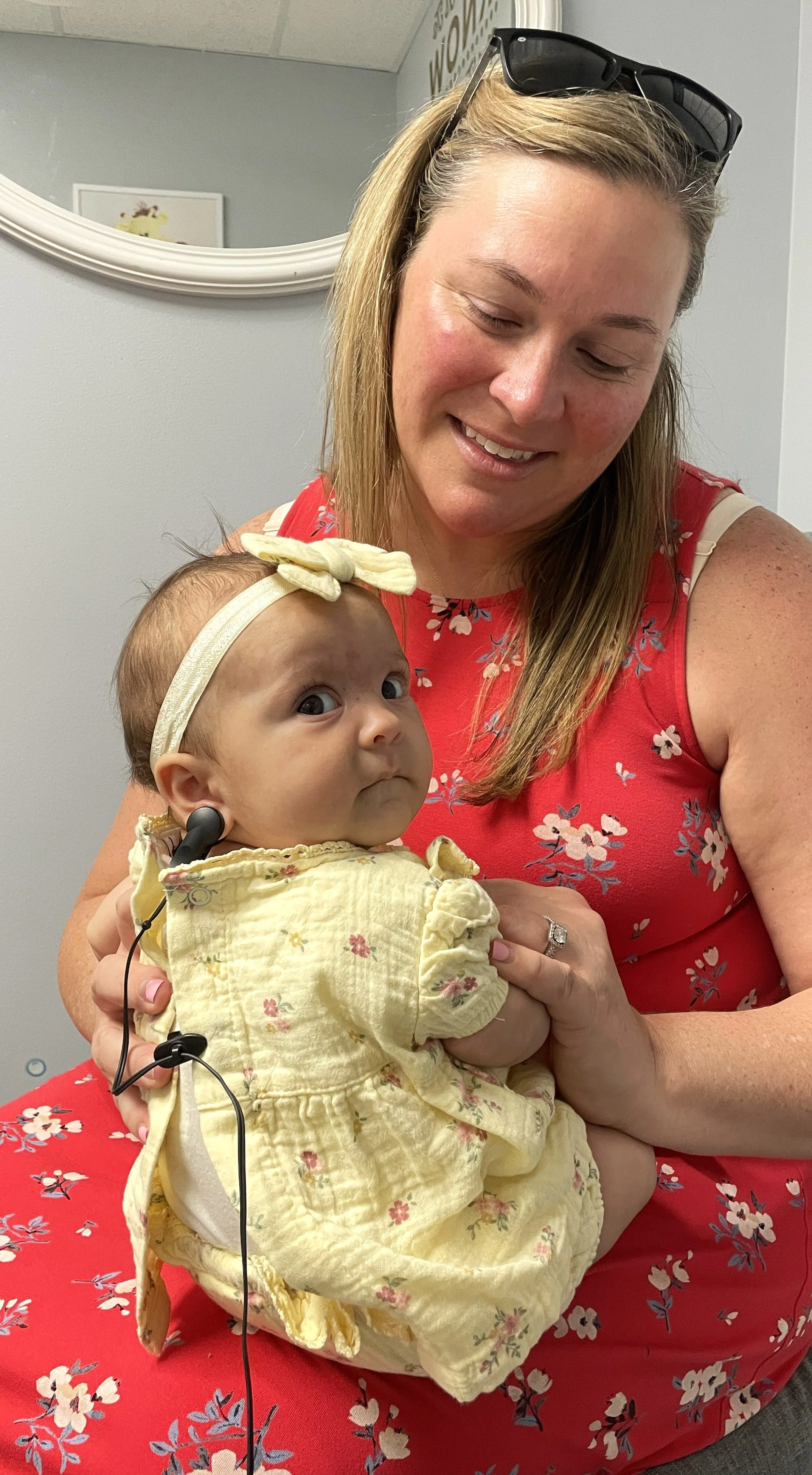
At New Hope Chiropractic, one of the tools we use to better understand autonomic nervous-system function is Heart Rate Variability, or HRV.
HRV measures the naturally occurring variation in time between heartbeats. Rather than simply telling us how fast your heart is beating, HRV gives us information related to autonomic regulation and adaptability.
We sometimes describe it to families as looking at how much adaptability or reserve the nervous system has available.
During pregnancy, that's particularly interesting because your body is undergoing enormous physiological changes.
Your cardiovascular system changes. Blood volume increases. Hormones change. Sleep may change. Physical demands increase. Your body is continually adapting as your baby grows.
HRV gives us another objective piece of information about how mom's autonomic nervous system is responding to those demands.
But there's an important distinction here too:
Our HRV scan is measuring mom—not directly measuring baby's nervous-system development.
Research is exploring relationships between maternal autonomic patterns, fetal heart-rate variability, and fetal development, but we should not interpret a maternal HRV scan as a direct neurological exam of the baby.
For us, HRV helps answer a more appropriate question:
How well is mom's nervous system adapting right now?
Why We Look at More Than HRV
HRV is just one part of the neurological picture at New Hope.
Our Neurological INSiGHT Scans allow us to look at several different aspects of nervous-system function.
Our HRV assessment provides information about autonomic adaptability and the relationship between activation and recovery.
Our NeuroSpinal EMG evaluates electrical activity associated with the muscles supporting the spine, helping us identify patterns of muscular tension, energy use, and coordination.
Our NeuroThermal Scan evaluates temperature patterns along the spine that can be influenced in part by autonomic regulation.
These scans are non-invasive and don't use radiation.
They also aren't obstetric tests. They don't diagnose pregnancy complications, evaluate fetal anatomy, replace ultrasound or fetal monitoring, or tell us whether a baby is healthy.
Instead, they give us objective information about mom's neurological function.
That's the piece we're interested in.
Why Nervous-System Regulation Matters During Pregnancy
Think about everything your body is doing right now.
Your cardiovascular system is adapting to increased demand. Your digestive system is changing. Your posture and biomechanics are shifting as your baby grows. Your sleep may be completely different. Hormonal changes are happening constantly.
And your nervous system is helping coordinate your response to all of it.
That's why our goal with prenatal chiropractic care isn't simply:
“Does your back hurt?”
Of course, comfort matters. Pregnancy-related back, pelvic, and hip discomfort are common reasons women seek chiropractic care.
But our neurologically focused approach looks beyond symptoms alone.
We want to understand how mom is functioning, regulating, and adapting throughout pregnancy.
Where Neurologically Focused Prenatal Chiropractic Fits
At New Hope Chiropractic, prenatal care is gentle and individualized to the needs of each mom and stage of pregnancy.
When our examination and Neurological INSiGHT Scans indicate chiropractic care is appropriate, we use specific adjustments to address neurospinal stress and support healthy nervous-system function and adaptability.
Our goal isn't to claim that an adjustment controls fetal development or guarantees a particular pregnancy or birth outcome.
It's to support mom.
We want her body to have the best possible neurological foundation for navigating pregnancy, birth, postpartum recovery, and motherhood.
That may mean we're paying attention to changes in sleep, tension, comfort, digestion, energy, stress adaptability, and overall function while also periodically reassessing neurological findings.
And this care belongs alongside prenatal medical care, not instead of it.
Your OB, midwife, maternal-fetal medicine specialist, pelvic-floor therapist, doula, chiropractor, and other providers can each have very different roles in supporting you through pregnancy.
You Get to Build Your Pregnancy Team
One of the things we love about working with pregnant moms is reminding them that they can be active participants in their care.
You can ask questions.
You can learn about your body.
You can choose providers who listen to you.
You can build a team that supports not only the absence of complications, but your physical and emotional well-being throughout the pregnancy.
Your ultrasounds, prenatal labs, blood-pressure checks, fetal monitoring, and routine prenatal appointments are important.
And you can also ask:
How is my nervous system handling all of this?
That's a question Neurological INSiGHT Scans can help us explore.
Supporting Mom Is Part of Supporting Baby
Your baby doesn't need you to be perfectly calm.
Your baby doesn't need nine months without a difficult day, an argument, a deadline, a sleepless night, or a moment when everything feels like too much.
What matters much more is the bigger picture.
How supported are you? How well are you sleeping? How is your body adapting? How much stress are you carrying? And how efficiently can your nervous system move from activation back toward recovery?
Research continues to show that the prenatal environment matters, while also reminding us that fetal development is incredibly complex and influenced by far more than any single variable.
At New Hope Chiropractic in Charleston, South Carolina, we believe supporting mom's nervous system deserves to be part of that conversation.
Through a detailed consultation, neurological examination, Neurological INSiGHT Scans, and individualized prenatal chiropractic care, we can take a closer look at how your nervous system is adapting throughout pregnancy.
Because one of the best ways we can support a developing baby is to care for the mom carrying them.
Related Articles
HRV Insights: Understanding Stress Impact on Baby's Nervous System Development
Nurturing Your Child's Health: Unleashing the Power of the Vagus Nerve
A Deep Dive Into Nervous System Regulation
Tackling Nervous System Dysregulation for Lasting Health: A Guide for Parents
