
Why Your Child's 2-Minute Adjustment Is Doing More Than You Think
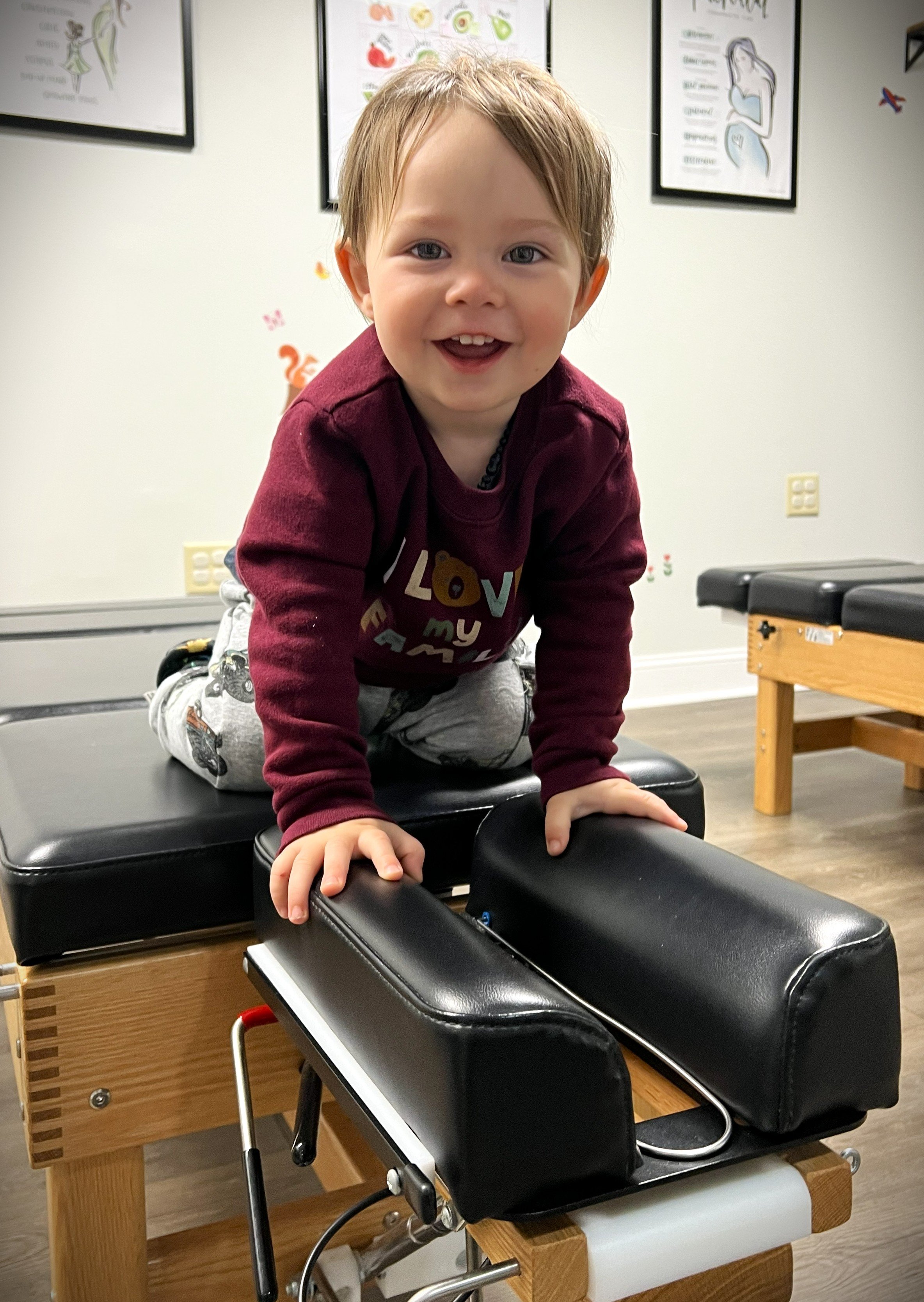
One of the first things parents notice at New Hope Chiropractic is how quick their child's adjustment is.
Sometimes it takes less than two minutes.
And naturally, many parents ask,
"That's it?"
It's a great question.
After all, almost every healthcare experience teaches us that longer appointments mean more treatment.
But neurologically-focused chiropractic care works differently.
It's not about how long you're on the table.
It's about giving the nervous system exactly the right input.
Healing Starts with the Nervous System
Your child's nervous system controls everything.
Sleep.
Digestion.
Focus.
Emotional regulation.
Movement.
Immune function.
Development.
Every message traveling between your child's brain and body passes through the nervous system first.
When that communication is interrupted by stress within the neurospinal system—what we call subluxation—the body often begins adapting in ways that show up as symptoms.
Our goal isn't to chase those symptoms.
Our goal is to help restore healthy communication between the brain and body.
Crew's Story: Tiny Adjustments. Big Changes.
When Crew first came to New Hope Chiropractic, he was struggling with so many of the challenges we commonly see in infants.
He had colic, difficulty breastfeeding, only turned his head to one side, struggled with painful gas at night, arched his back, felt stiff, and was also suspected of having oral ties.
His first-time parents were exhausted. Like so many moms and dads, they just wanted their baby to be comfortable, happy, and able to thrive.
When we performed Crew's Neurological INSiGHT Scans, they showed significant stress throughout his nervous system.
Using gentle, neurologically-focused chiropractic adjustments, we began helping his nervous system shift out of stress mode and communicate more effectively.
The changes came quickly.
His colic disappeared.
Breastfeeding became easier.
He began turning his head both directions.
The gas pains resolved.
His back arching and stiffness disappeared.
His parents were so encouraged by his progress that they actually postponed an out-of-state move so they could complete his care with our team.
Today, Crew is happy, comfortable, developing beautifully, and thriving.
His story reminds us that sometimes the smallest, most specific input can create the biggest changes because we're communicating directly with the nervous system—not simply treating symptoms.
What Happens During an Adjustment?
Many people assume the adjustment is about moving bones.
In reality, it's about sending information to the brain.
Along your child's spine are thousands of tiny receptors that constantly send information to the brain about posture, movement, tension, and body awareness.
A gentle, specific adjustment stimulates these receptors.
Within milliseconds, that information travels to areas of the brain responsible for regulating movement, balance, posture, stress, digestion, sleep, and autonomic nervous system function.
In other words...
The adjustment is less about the spine itself and more about how the brain responds to the input.
Gentle Doesn't Mean Small
One of the biggest misconceptions about pediatric chiropractic care is that gentle means ineffective.
For babies and children, gentle is exactly what's needed.
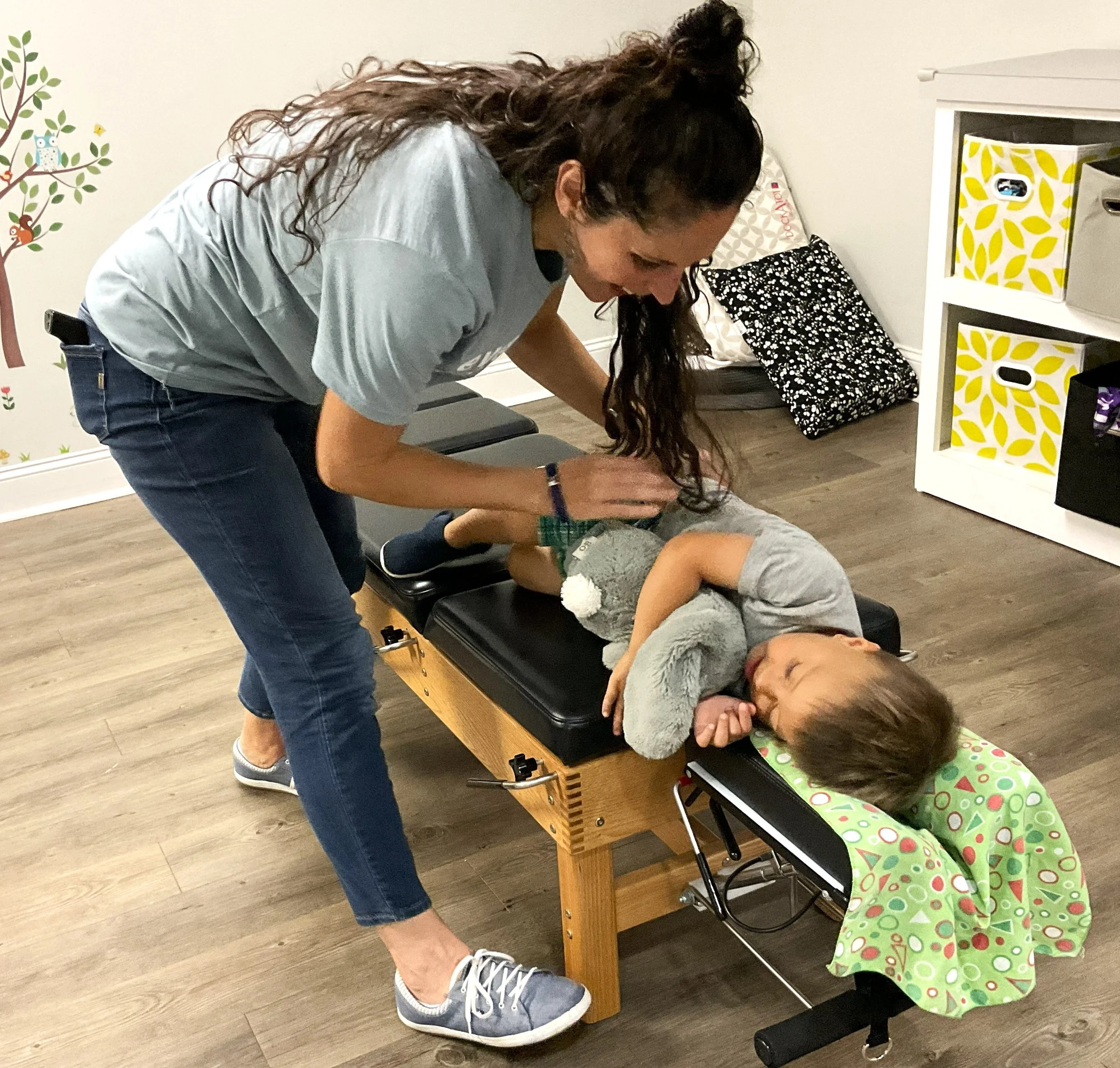
In fact, the amount of pressure we use for an infant adjustment is often compared to checking the ripeness of a tomato.
Children don't need force.
Their nervous systems simply need the right signal.
Why Does It Only Take a Minute or Two?
Think about flipping a light switch.
It only takes a second.
But the effect continues long after your finger leaves the switch.
Neurologically-focused chiropractic adjustments work much the same way.
The adjustment itself is brief.
But the nervous system continues processing that new information over the next several hours—and often for days afterward.
Many parents notice their child sleeping better that night.
Others notice improved digestion, calmer behavior, or better emotional regulation over the next few days.
The adjustment starts the process.
The nervous system does the healing.
More Time Doesn't Mean Better Results
Parents sometimes wonder if longer adjustments would work better.
Actually, the opposite is often true.
Many of the children we care for already have overwhelmed nervous systems.
They've spent all day processing:
School
Screens
Loud environments
Therapies
Sports
Sensory input
Emotional stress
Adding prolonged physical input isn't always helpful.
Instead, we provide one precise neurological input that allows the brain to begin reorganizing itself without overwhelming the system.
Sometimes less truly is more.
Why Consistency Matters
If you've ever wondered why we recommend care plans rather than occasional visits, the answer comes down to one word:
Neuroplasticity.
The brain changes through repetition.
Just like learning to ride a bike or play the piano requires practice, helping the nervous system build healthier patterns takes consistency.
Each adjustment builds upon the previous one.
Over time, the nervous system becomes more adaptable, more resilient, and better able to regulate everyday stress.
That's why frequency often matters far more than the length of any individual adjustment.
How We Measure Progress
One of the things that makes care at New Hope Chiropractic unique is that we don't simply rely on symptoms to guide care.
We use advanced Neurological INSiGHT Scans to objectively evaluate how the nervous system is functioning.
These scans measure:
Heart Rate Variability (HRV)
Surface EMG
Thermal nerve scans
Together, they help us understand:
How well your child's nervous system adapts to stress
Areas of neurological tension
Balance between the "fight-or-flight" and "rest-and-digest" systems
Progress throughout care
Instead of guessing, we can actually measure changes in nervous system function over time.
It's About the Foundation
Many families come to us after trying therapies, supplements, medications, or other interventions.
Those approaches can all play an important role.
But if the nervous system isn't communicating well, progress often feels slower than expected.
That's why we focus on the foundation first.
When the brain and body communicate more efficiently, many other systems begin functioning more efficiently too.
Small Adjustment. Big Impact.
Your child's adjustment may only take a minute or two.
But don't mistake its length for its significance.
The adjustment is simply the catalyst.
The nervous system continues responding long after you leave our office.
If you've been searching for answers and want to better understand how your child's nervous system is functioning, we'd love to help.
Schedule a consultation and Neurological INSiGHT Scans with our team:
https://www.newhopesc.com/schedule
Sometimes the biggest changes begin with the smallest, most specific input.
Want to keep learning?
If this article helped you understand why neurologically-focused adjustments are so gentle yet so powerful, these articles are great next reads:
• What Is Subluxation? (explains what we're actually correcting)
• The Health Test Your Pediatrician Isn't Running (explains INSiGHT Scans)
• What to Expect at Your First Visit (walks through exactly what happens at New Hope Chiropractic)
• Why Your Child Can't Calm Down (shows how nervous system stress affects behavior)
