

When you start thinking about having a baby, your mind probably goes straight to the usual checklist. Start taking prenatal vitamins. Track your cycle. Eat healthier. Cut back on caffeine. Schedule an appointment with your OB-GYN.
Those are all important steps. But there's another part of preparing for pregnancy that deserves attention long before you see a positive test: your nervous system.
Your baby's nervous system begins developing incredibly early in pregnancy. The neural plate, which eventually develops into the brain and spinal cord, begins forming around the third week after fertilization—often before a woman realizes she's pregnant.
That early development is one reason preconception health matters so much.
But preparing for pregnancy isn't about creating a perfect body or eliminating every possible source of stress. It's about understanding how your body functions, supporting your health, and giving yourself the resources to navigate the physical and emotional changes ahead.
At New Hope Chiropractic, we believe nervous-system regulation deserves a place in that conversation.
Preparing for Pregnancy Means Looking Beyond the Checklist
For many women, the journey toward pregnancy begins months before conception.
You're thinking about nutrition, taking supplements, monitoring your cycle, and trying to understand what your body needs. Perhaps you're also navigating demanding workdays, poor sleep, headaches, chronic tension, or a constant feeling that you're running from one responsibility to the next.
You may be doing everything on your preconception checklist while still feeling physically and emotionally exhausted.
And if you've been trying to conceive without success, the process can become even more overwhelming.
One of the most important things to understand is that reproductive health involves several interconnected systems. Hormones, metabolism, immune function, sleep, mental health, and the nervous system all contribute to overall health.
The nervous system communicates with the endocrine system, which regulates reproductive hormones. But fertility isn't controlled by the nervous system alone. Ovulation, sperm health, reproductive anatomy, age, and other medical factors also matter.
That's why we encourage a comprehensive approach that includes appropriate preconception medical care alongside attention to stress, sleep, movement, and overall nervous-system function.
Preparing your body for pregnancy means supporting the whole person, not chasing one perfect number or supplement.
Understanding Your Nervous System's Gas Pedal and Brake Pedal
Your autonomic nervous system helps regulate many of the functions happening inside your body without conscious effort, including heart rate, blood pressure, digestion, and responses to stress.
At New Hope, we often explain this system using the analogy of a gas pedal and a brake pedal.
The sympathetic nervous system acts like your gas pedal. It helps your body respond to challenges by increasing alertness and mobilizing energy when needed.
The parasympathetic nervous system supports functions associated with rest, digestion, and recovery. It's the brake pedal that helps your body settle after a stressful experience.
Neither system is bad. You need both to function well.
The goal is flexibility: the ability to respond to a challenge and then recover when that challenge has passed.
Think about the difference between a day when you've slept well, eaten nourishing meals, and had time to move your body and a day when you've barely slept, skipped lunch, and spent hours rushing from one responsibility to the next.
Your body responds differently to those experiences.
When stress becomes persistent, it can affect sleep, muscle tension, digestion, mood, and other aspects of health. Those are important concerns to address when you're preparing for the physical demands of pregnancy.
How Stress and Reproductive Hormones Communicate
One of the most fascinating parts of human physiology is how closely the brain, nervous system, and endocrine system communicate.
Two important pathways are involved.
The hypothalamic-pituitary-adrenal (HPA) axis helps coordinate the body's hormonal response to stress, including cortisol production.
The hypothalamic-pituitary-gonadal (HPG) axis helps regulate reproductive function, including the hormonal signals involved in ovulation, menstrual cycles, and sperm production.
These systems interact.
Under certain circumstances, significant physiological or psychological stress can influence reproductive hormone signaling. Severe energy deficiency, excessive exercise, and other stressors can contribute to menstrual disturbances, for example.
However, everyday stress does not automatically prevent pregnancy, and stress should never be assumed to be the cause of infertility.
For couples who are having difficulty conceiving, medical evaluation remains essential. Nervous-system and stress-management approaches can be valuable for overall well-being, but they are not substitutes for identifying and addressing reproductive health concerns.
The takeaway is that your body's ability to manage and recover from stress is worth supporting whether you're trying to conceive now or preparing for pregnancy in the future.
The Vagus Nerve and Your Body's Ability to Recover
You've probably heard us talk about the vagus nerve at New Hope Chiropractic.
The vagus nerve is a major component of the parasympathetic nervous system. It carries information between the brain and organs throughout the chest and abdomen and participates in regulating functions such as heart rate and digestion.
It's an important part of the body's communication and recovery systems.
When we talk about nervous-system regulation, we're interested in how effectively the body responds to changing demands and returns toward a resting state afterward.
That includes considering sleep quality, physiological stress, recovery, and patterns of muscular tension.
One measurement we use in our office is Heart Rate Variability (HRV), which reflects variation in the timing between heartbeats and provides information about autonomic regulation.
HRV can be influenced by many factors, including sleep, activity, illness, age, and stress. It isn't a fertility test and cannot determine whether a woman is ready to conceive.
But it can offer another perspective on physiological regulation as part of a broader assessment.
Why Preconception Health Matters for Your Baby's Development
Pregnancy is an extraordinary period of growth and development.
Within the first several weeks, foundational structures of the brain and spinal cord begin forming. This is why preconception recommendations include adequate folic acid, reviewing medications with a healthcare professional, managing chronic health conditions, and addressing lifestyle factors that can influence maternal and fetal health.
Nutrition, metabolic health, environmental exposures, and certain medical conditions can affect pregnancy outcomes. The health of both parents before conception also matters.
Research continues to explore relationships between maternal stress, pregnancy experiences, and child development. While some studies have identified associations, those findings do not mean that a stressful pregnancy causes a child to develop ADHD, autism, sensory challenges, or other neurological conditions.
A healthy pregnancy also doesn't require a mother to remain calm every moment.
Life continues to happen. Work can be demanding, relationships can be complicated, and unexpected challenges arise.
The goal isn't perfection. It's building routines, resources, and a healthcare team that support your physical and emotional well-being.
The Perfect Storm: Understanding Your Health History Before Pregnancy
At New Hope Chiropractic, we use the Perfect Storm framework to help families consider how different stressors and experiences may accumulate over time.
For women preparing for pregnancy, that means looking beyond what is happening today and exploring their broader health history.
Have you experienced years of poor sleep or persistent tension? Do you frequently feel overwhelmed? Have you dealt with recurring headaches, neck discomfort, or difficulty recovering from stressful periods? Are you entering pregnancy already feeling physically depleted?
These questions help us understand your current health and the areas where additional support may be appropriate.
We also want to understand your past pregnancy and birth experiences if you're preparing for another baby.
The Perfect Storm is an educational framework, not a medical diagnosis or a proven explanation for fertility problems or developmental conditions. Its value is in encouraging us to consider the whole person rather than focusing on one isolated symptom.
At New Hope, our emphasis is on evaluating neurospinal function, identifying patterns of tension, and supporting overall regulation and adaptability.
Preparing for Birth Begins Before You're Pregnant
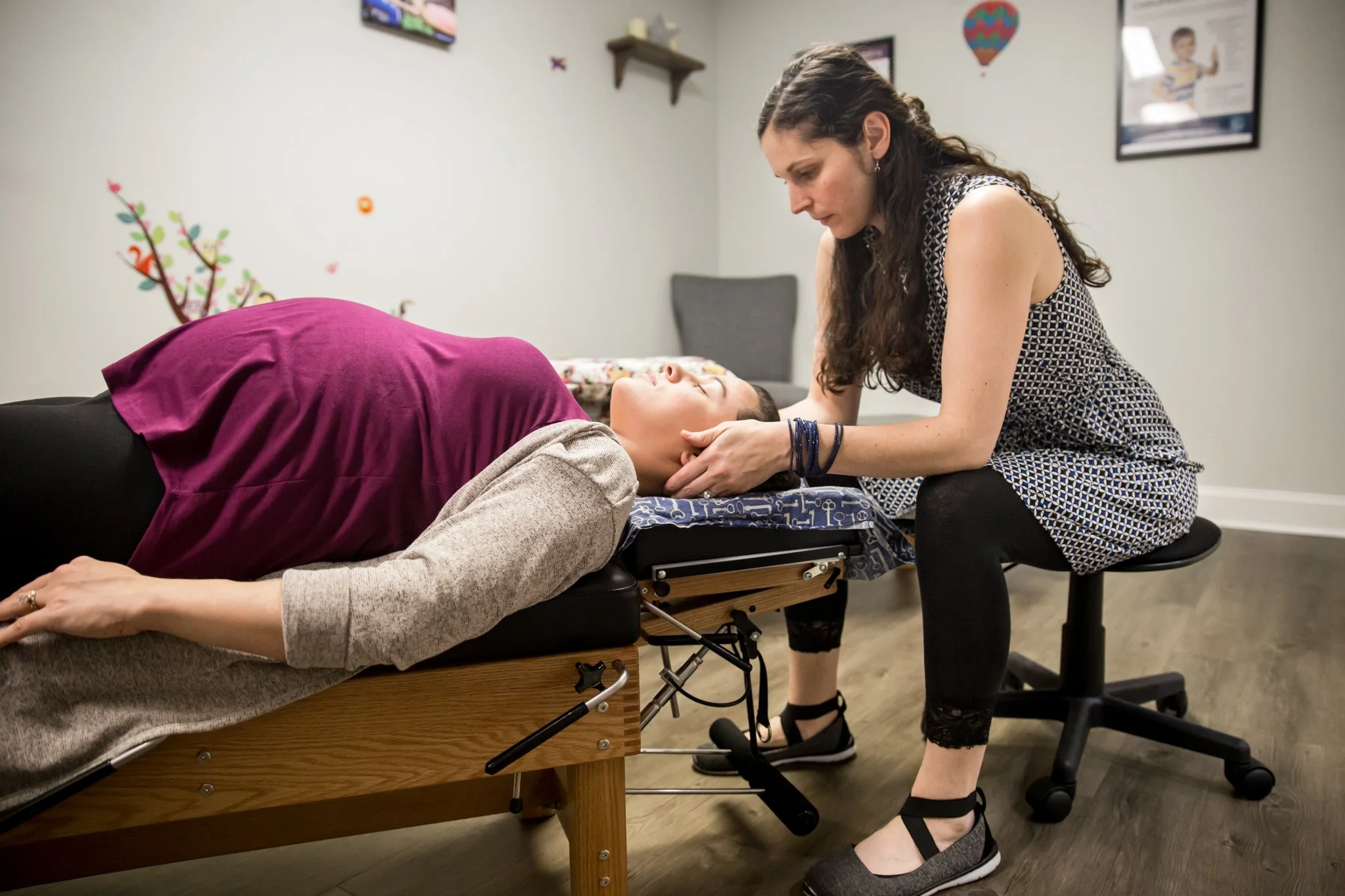
When women think about pregnancy preparation, much of the attention goes toward conception and the nine months that follow.
But it's also worth thinking ahead to the physical demands of pregnancy, labor, delivery, and postpartum recovery.
Your body will experience changes in posture, weight distribution, movement, and physical comfort. Your sleep patterns and daily routines may change significantly, and you'll need a support system that can adapt along with you.
Building habits before pregnancy can make those transitions easier to navigate.
Regular movement, appropriate strengthening, adequate sleep, balanced nutrition, and stress-management strategies all contribute to overall well-being.
It's also valuable to establish relationships with the healthcare professionals you may want on your team, including your OB-GYN or midwife, pelvic floor physical therapist, and other providers based on your individual needs.
If you've had a previous difficult birth, taking time to discuss that experience and develop a plan for your next pregnancy can be especially meaningful.
Medical interventions such as induction, epidural anesthesia, and cesarean delivery can be necessary or appropriate for many reasons. Their use does not automatically indicate trauma or nervous-system injury to a baby.
The goal is informed decision-making, individualized care, and a healthy experience for both mother and child.
Preconception Health Is a Two-Partner Journey
One of the biggest gaps in conversations about preparing for pregnancy is how much responsibility is placed on women.
But preconception health involves both partners.
Sperm development takes approximately two to three months, making the months leading up to conception an important opportunity for men to address nutrition, sleep, exercise, medication exposures, and other factors that influence reproductive health.
Both partners also benefit from managing chronic stress, maintaining healthy routines, and supporting one another through the emotional challenges of trying to conceive.
At New Hope, we love seeing couples take a proactive approach to their health together.
Whether that means improving sleep, prioritizing movement, making time for recovery, or establishing consistent wellness routines, preparing as a team creates an opportunity to build habits that can continue throughout pregnancy and parenthood.
How Neurological INSiGHT Scans Fit Into Preconception Wellness
At New Hope Chiropractic, one of the ways we evaluate neurological and neurospinal function is through our Neurological INSiGHT Scans.
These noninvasive assessments provide information that we consider alongside your health history, examination, and individual goals.
Our HRV scan evaluates heart-rate variability to provide information about autonomic regulation and patterns associated with physiological stress and recovery.
Our NeuroSpinal EMG scan measures muscle electrical activity along the spine, helping us identify patterns of tension and neuromotor inefficiency.
Our NeuroThermal scan evaluates temperature patterns along the spine, which may be influenced by autonomic activity.
These scans do not measure fertility, hormone levels, ovarian function, sperm quality, or placental health. They also cannot diagnose dysautonomia or determine whether stress is preventing conception.
What they provide is a different perspective on aspects of your neurological and neurospinal function.
For women who want to take a proactive approach to wellness before pregnancy, that information can be part of a personalized chiropractic evaluation.
Where Neurologically Focused Chiropractic Care Fits
Our approach at New Hope is centered on gentle, individualized chiropractic care focused on neurospinal function.
When appropriate, Dr. Angela and Dr. Chris use specific adjustments based on your examination findings, history, and care goals.
For women preparing for pregnancy, we focus on supporting spinal mobility, addressing appropriate musculoskeletal concerns, and evaluating how their bodies are responding to everyday physical demands.
We also consider patterns of neurological and physiological stress as part of the broader wellness picture.
Chiropractic care is not a treatment for infertility, hormonal disorders, or reproductive conditions, and there is not sufficient evidence that adjustments improve conception rates, correct fetal positioning, or prevent obstetric complications.
Our role is complementary to your preconception and prenatal medical care.
We want you to feel informed, supported, and confident as you build a healthcare team for this next chapter.
Five Ways to Start Preparing Your Body Today
You don't need to wait for a positive pregnancy test to begin prioritizing your health. Here are five meaningful steps you can start taking now.
1. Schedule a preconception appointment. Review your medical history, medications, vaccinations, chronic conditions, and any fertility concerns with your OB-GYN or another qualified healthcare professional.
2. Prioritize sleep and recovery. Build a consistent sleep routine and identify the habits that help you recover from physically and emotionally demanding days.
3. Support your body with movement and nutrition. Focus on regular activity, balanced meals, and appropriate prenatal supplementation. Most people planning pregnancy are advised to take 400 micrograms of folic acid daily, though individual needs may differ.
4. Build a stress-management routine you can maintain. Walking, breathing exercises, prayer, journaling, time outdoors, and meaningful connection with others can all support emotional well-being.
5. Evaluate your physical and neurological wellness. If you're experiencing persistent tension, discomfort, or concerns about how your body is functioning, seek an appropriate evaluation. At New Hope, that may include a consultation, examination, and Neurological INSiGHT Scans.
The most valuable preconception plan is one that addresses your individual needs and gives you sustainable habits you can carry into pregnancy.
Give Yourself a Strong Foundation for the Journey Ahead
Preparing for pregnancy is about more than tracking ovulation and remembering to take prenatal vitamins.
It's an opportunity to pay attention to your health, understand how your body responds to stress, and establish the support you'll want as your family grows.
You cannot control every aspect of conception, pregnancy, or birth. But you can take meaningful steps to support your physical and emotional well-being.
At New Hope Chiropractic in Charleston, South Carolina, we're passionate about helping women and families take a proactive approach to neurological and neurospinal wellness.
Whether you're planning your first baby, preparing for another pregnancy, or simply wanting to prioritize your health before this next season of life, we'd love to help you better understand your nervous-system function.
Schedule Your Consultation and Neurological INSiGHT Scans at New Hope Chiropractic
Related Articles
The #1 Way to Prepare for Birth: Support Your Nervous System
Find Your Circle: Choosing the Right Providers for Your Prenatal Team
The Truth About Stress During Pregnancy: What Every Mom Deserves to Know
