
If your baby’s head keeps tilting to one side or they struggle to turn equally both ways, you’ve probably been told it’s “just a tight muscle.”
Just stretch it.
Just do more tummy time.
Just wait it out.
But here’s the part most parents are never told:
Torticollis is rarely just a muscular issue — it’s a nervous system issue.
When a baby’s nervous system gets stressed or overwhelmed during pregnancy or birth, those neck muscles tighten as a response.
This is why stretching alone often isn’t enough.
You’re Not Alone in This (And You’re Not Doing Anything Wrong)
We meet parents every week who are exhausted, worried, and doing everything they’ve been told — yet nothing seems to be helping.
Maybe your baby:
• Cries during diaper changes
• Struggles to nurse on one side
• Hates tummy time
• Gets stiff or uncomfortable when held a certain way
• Seems “unsettled”
• Has a flat spot developing
And maybe the stretches and therapy exercises feel like they make things worse.
That’s because those stretches are addressing the muscle — not the underlying neurological tension causing the muscle tightness in the first place.
While the muscle is what you can see, the nervous system is what’s actually driving it.
⭐ Flynn’s Story: From Stuck to Steady, Calm, and Connected
Flynn came to our office at 14 months old after struggling with torticollis since birth.
His early days in the NICU, combined with physical and emotional stress in utero, had created imbalance and tension in his developing nervous system.
His parents had tried physical therapy and saw some improvement — but not full resolution. As he approached toddlerhood, they worried the issue might now be too severe to help.
Flynn showed early signs of neurological tension, including:
• Stiffness
• Back arching
• Head banging
• Persistent tilt toward one side
• Developing plagiocephaly (flat head)
When we began neurologically-focused chiropractic care, our goal was to help his body release tension patterns in the spine and nervous system that were keeping him stuck.
With consistent care, Flynn made steady, measurable progress.
His neck motion improved. His torticollis finally began to unwind. His plagiocephaly started to change as pressure evened out.
And something even more meaningful happened —
✨ He became calmer.
✨ His communication began to expand.
✨ His body felt more at ease and comfortable.
Flynn’s story is a beautiful reminder that when a child’s nervous system is supported, everything else becomes easier — movement, development, sleep, connection, and communication.
Understanding Torticollis: It’s More Than Meets the Eye
1. Torticollis starts in the nervous system — not the muscles.
Most providers focus on what they can see: the head tilt, tight muscle, or reduced range of motion.
But what’s underneath is what actually matters.
Torticollis happens when the upper cervical spine (the top of the neck) becomes stressed, misaligned, or “stuck,” often from prenatal or birth-related tension.
This affects:
• Muscle firing
• Head and neck movement
• Sensory processing
• Regulation and calm
• The baby’s ability to rest, feed, and turn comfortably
When the nervous system is stressed, muscles tighten to protect the body — which is why stretching alone rarely solves the problem.
2. The most common cause? Birth stress.
Birth is beautiful — and also one of the most physically intense experiences a baby will ever go through.
Common contributors to upper-neck stress include:
• Long or fast labors
• Baby stuck in one position
• Inductions
• C-sections
• Vacuum or forceps
• Shoulder dystocia
• Cord issues
• Womb positioning
These layers of stress on a baby’s developing nervous system create what we call the Perfect Storm — and torticollis is often one of the first visible signs.
3. Why stretching alone doesn’t work
Stretching works on the muscles.
Torticollis is driven by the nervous system.
It’s like trying to push a car while the parking brake is on — you’re doing the right thing, but the underlying tension won’t release.
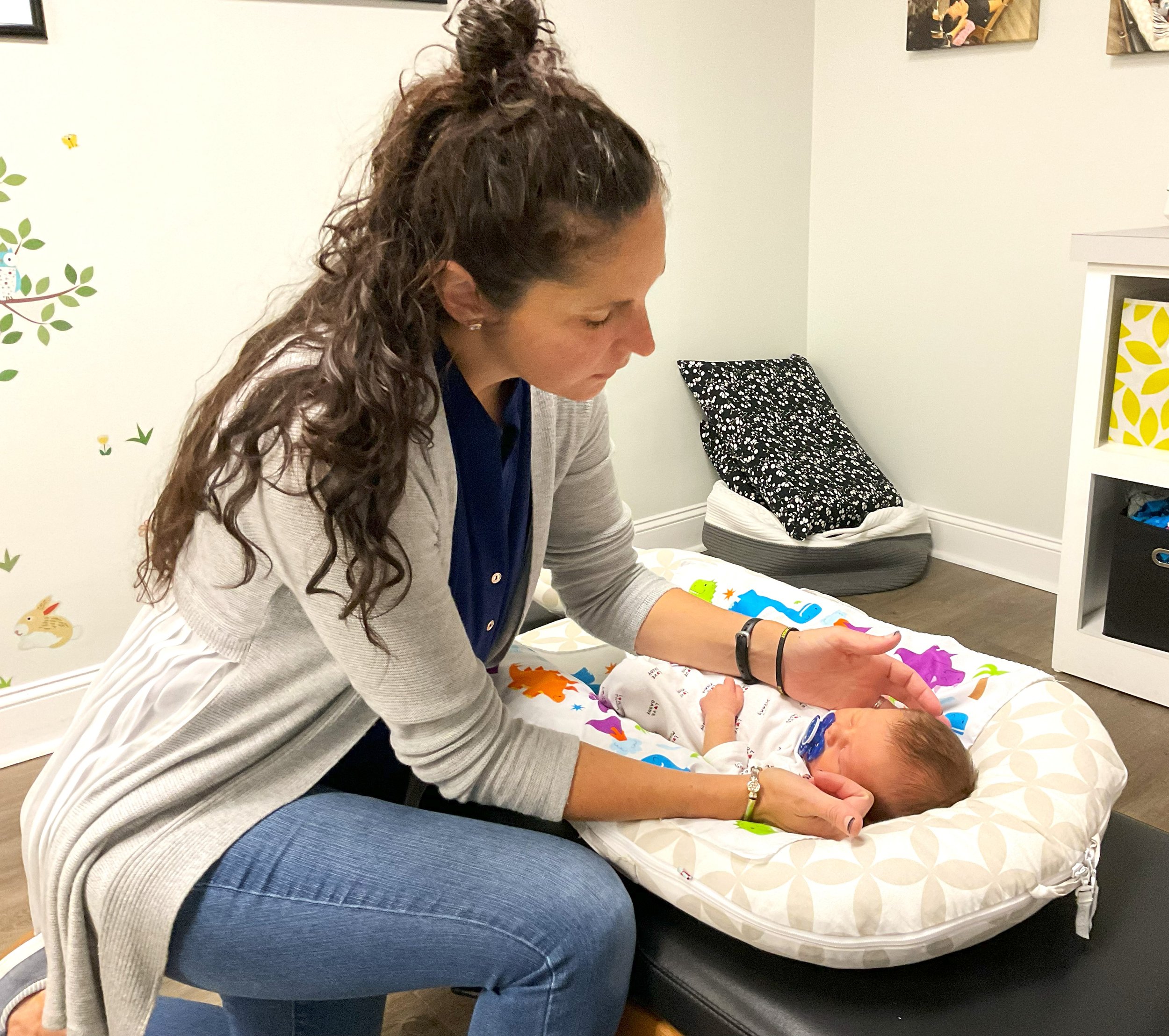
Once we calm the nervous system and restore motion in the upper neck through gentle, precise adjustments, stretching and PT begin working more effectively because the body is no longer resisting.
4. The hidden consequences of unresolved torticollis
Because the upper neck controls parasympathetic function and vagus nerve signaling, unresolved tension can contribute to:
• Feeding challenges
• Reflux and digestive struggles
• Gassy, tense bellies
• Poor sleep
• Frequent spit-up
• Colic-like crying
• Ear fluid and repeated infections
• Plagiocephaly
• Delayed rolling, crawling, or sitting
• Sensory or coordination challenges
This is why early support matters — not to treat these issues, but to help the nervous system function more clearly and efficiently.
🌿 A Gentle, Effective Path Forward
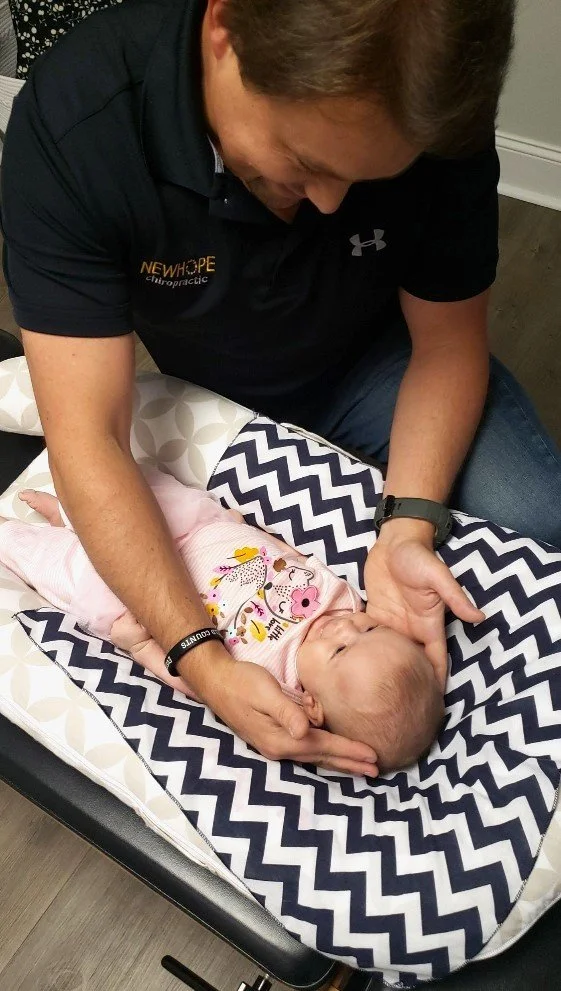
At New Hope Chiropractic, we use safe, gentle adjustments (no more pressure than checking an avocado for ripeness) to help release tension in the upper neck and support healthy nervous system function.
Our INSiGHT neurological scans help us see:
• Where stress is located
• How severe it is
• How it affects communication pathways
Parents often report changes quickly — calmer behavior, easier feeding, better mobility, improved comfort, and smoother developmental progress.
Sometimes babies simply get “stuck,” and when their nervous system gets unstuck, everything begins to shift.
💛 Ready to Help Your Baby Thrive?
At New Hope Chiropractic, we believe your baby deserves comfort, connection, and clear, efficient nervous system function.
And you deserve answers — not just stretches and waiting.
If you’re not local to Charleston, we can help you find another neurologically-focused pediatric office near you.
Your baby’s nervous system matters — and we’re here to support their journey. 💛
