
The Test That Won’t Come Back “Normal” When Your Child Is Still Struggling
You have done the bloodwork.
You have sat through evaluations, appointments, and follow-ups.
You may have tried supplements, dietary changes, therapy, medication, or a “wait and see” approach.
Yet something still does not feel right.
Your child may struggle to sleep, digest food comfortably, regulate emotions, tolerate everyday sensory input, focus at school, or recover from stress. But each time you seek answers, you hear some version of:
“Everything looks normal.”
“They may grow out of it.”
“Let’s give it more time.”
Parents often arrive at New Hope Chiropractic feeling relieved that previous testing did not uncover a serious disease—but also frustrated because their child is clearly still struggling.
A normal result does not mean that you are imagining what you see.
It may simply mean that the testing performed was designed to look for something different.
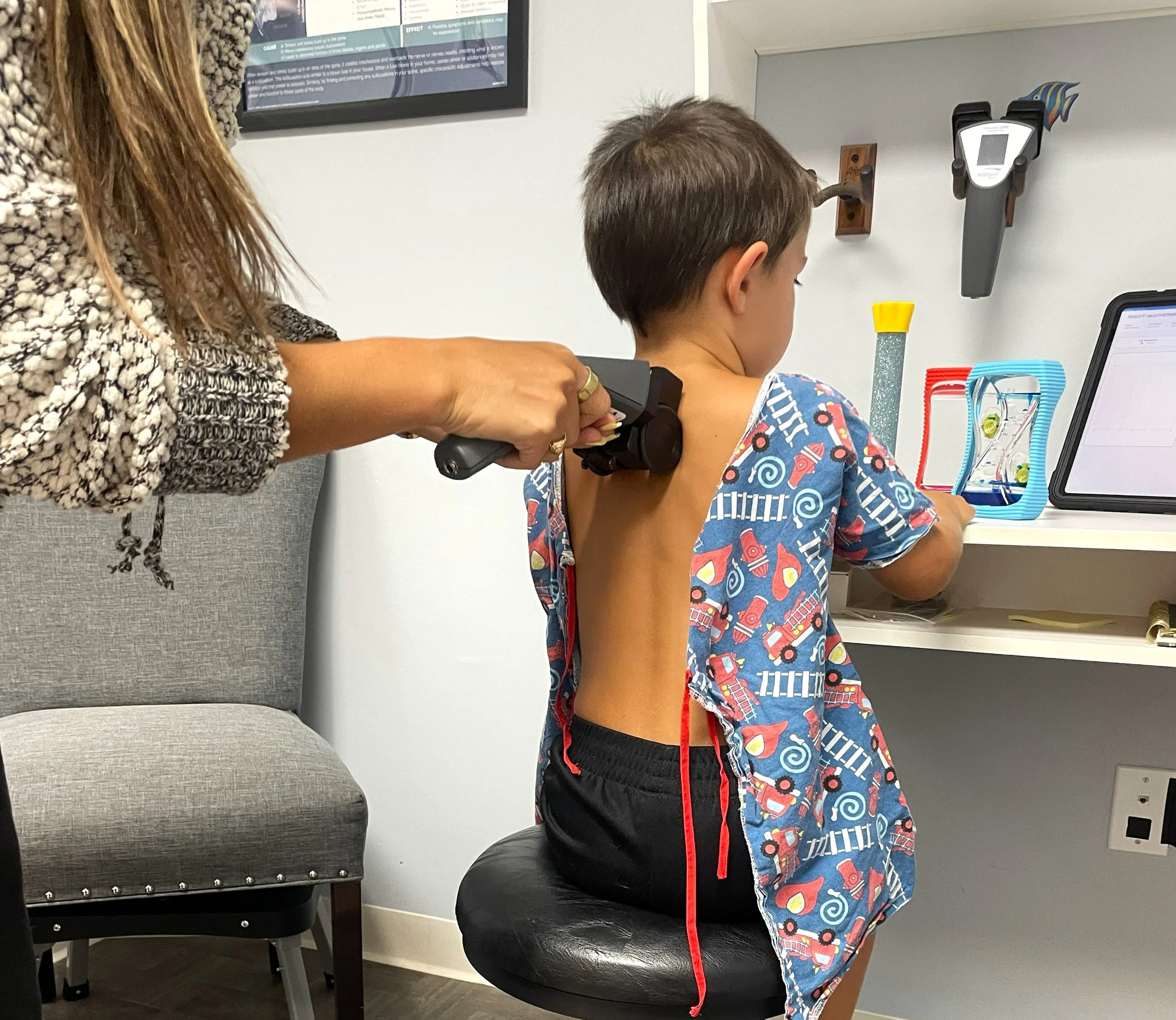
At New Hope Chiropractic, we use noninvasive Neurological INSiGHT Scans to assess patterns of stress, tension, coordination, and adaptability within the nervous system. These scans do not diagnose a disease or replace medical testing. They give us a different kind of information: a measurable view of how the nervous system appears to be functioning and adapting in everyday life.
For many families, that is the missing piece they have been searching for.
Why Standard Testing May Not Explain Your Child’s Struggles
Bloodwork, MRIs, EEGs, X-rays, and other medical tests can provide incredibly important information. Depending on the test, they may help doctors identify disease, injury, inflammation, structural abnormalities, nutritional concerns, or electrical changes in the brain.
But many of these tests are not designed to measure how efficiently a child’s nervous system is handling ordinary stress from moment to moment.
That distinction matters.
A child can have normal laboratory results while still experiencing:
Difficulty settling or sleeping
Constipation, reflux, or digestive discomfort
Frequent emotional outbursts
Sensory overwhelm
Trouble with transitions
Poor coordination or body awareness
Chronic tension
Difficulty focusing
Low adaptability and resilience
Recurring headaches or discomfort
A body that always seems to be “on alert”
These experiences are real, even when traditional testing does not identify a disease.
That is why we do not look at scans as a replacement for medical care. We look at them as another piece of the puzzle—one that helps us evaluate the system responsible for coordinating nearly everything the body does.
The Nervous System Is Your Child’s Communication Network
Your child’s nervous system is constantly receiving information, interpreting it, and deciding how the body should respond.
It helps coordinate movement, digestion, sleep, heart rate, breathing, immune activity, emotional responses, attention, and the ability to adapt to changes in the environment.
You can think of it as the communication network connecting the brain and body.
That communication flows in both directions.
Sensory nerves carry information toward the brain about what is happening inside and around the body. Motor nerves carry instructions from the brain back to muscles, organs, and tissues. The autonomic nervous system quietly regulates many functions that happen without conscious thought.
For babies and young children, this includes many of the foundational functions parents watch closely:
Eating
Sleeping
Pooping
Moving
Calming
Connecting
Developing
When the nervous system is functioning efficiently, the body can respond to stress and then return to a calmer, more balanced state.
When a child’s system becomes overwhelmed, it may begin operating as though the gas pedal is being pressed too often while the brake pedal is not engaging effectively.
The child is not necessarily choosing to be difficult, rigid, emotional, restless, or sensitive. Their body may be having difficulty processing what is happening and organizing an appropriate response.
Why Therapies and Health Protocols May Not Be the Whole Answer
Occupational therapy, physical therapy, speech therapy, medical care, nutrition, counseling, and other forms of support can all be valuable.
Many children need a collaborative team.
However, parents sometimes tell us that they are doing everything they have been advised to do and still feel as though progress has stalled.
The child may be receiving excellent therapy, but their nervous system remains too stressed or disorganized to fully adapt to that input.
That does not mean the therapy is wrong.
It may mean the body needs additional neurological support.
At New Hope Chiropractic, our role is not to replace your child’s pediatrician or therapists. Our role is to evaluate nervous-system function and determine whether patterns of neurological stress may be creating another obstacle to regulation, development, healing, or adaptability.
What Makes Neurological INSiGHT Scans Different?
Neurological INSiGHT Scans allow us to gather objective information about patterns within the nervous system rather than relying only on symptoms.
Symptoms matter, but they do not always tell the entire story.
Two children can experience the same symptom for very different reasons. One child’s sleep difficulties may be connected to chronic tension and a nervous system that cannot settle. Another child may have a medical, environmental, respiratory, nutritional, or behavioral factor contributing to poor sleep.
The scans do not tell us everything, but they help us ask better questions and create a more individualized chiropractic care plan.
At your child’s first visits, we combine the scans with:
A detailed health and birth history
Information about current challenges
Developmental and lifestyle factors
Your goals for your child
A chiropractic examination
The doctor’s clinical findings
We then repeat scans periodically—often around every 12 visits during active care—to evaluate changes and compare them with what the family is noticing at home.
This gives us a clearer way to monitor progress rather than simply guessing.
The Three INSiGHT Scans, Explained in Plain Language
We use three types of scans together because each provides different information.
NeuroThermal Scan
The NeuroThermal Scan measures temperature patterns along the spine.
Temperature is influenced in part by autonomic nerve activity and blood-vessel regulation. When we see uneven or persistent patterns, it can suggest that the nervous system is not regulating evenly throughout the body.
This information may be especially relevant when a child is experiencing challenges related to:
Digestion
Sleep
Immune resilience
Reflux or colic
Constipation
Chronic congestion
Allergies
Repeated ear trouble
Difficulty settling
The scan is gentle and noninvasive. It can be performed on infants, children, teens, and adults.
NeuroSpinal EMG Scan
The NeuroSpinal EMG Scan measures electrical activity associated with the muscles that support the spine.
This helps us evaluate patterns of muscle tension, energy use, and coordination.
Some children appear calm on the outside while their bodies are working extremely hard internally. Others may have uneven muscle patterns that reflect compensation, poor coordination, postural stress, or difficulty organizing motor output.
This scan can be particularly helpful when evaluating children with:
Sensory-processing challenges
ADHD-type struggles
Anxiety
Emotional dysregulation
Poor posture
Coordination difficulties
Motor delays
Chronic tension
Headaches
Repetitive strain from sports or activities
Rather than labeling a child, the scan gives us another way to understand how much effort their nervous system may be using simply to hold the body upright and organized.
Heart Rate Variability Scan
Heart rate variability, commonly called HRV, looks at the small variations in time between heartbeats.
A healthy heart does not beat with perfectly identical spacing. Those natural variations are influenced by the autonomic nervous system and can provide information about adaptability.
In simple terms, HRV helps us evaluate how effectively the body appears to shift between activation and recovery.
This can be especially meaningful for children who struggle with:
Meltdowns
Rigidity
Transitions
Big emotional reactions
Chronic worry
Difficulty calming
Poor sleep
Low energy
Feeling constantly overwhelmed
HRV is not a diagnosis. It is one piece of information that helps us assess whether a child’s nervous system appears to have the reserve and flexibility needed to respond to daily stress.
What Do We Mean by Subluxation and Dysautonomia?
At New Hope Chiropractic, we use the term subluxation to describe areas of neurological and mechanical stress that may interfere with clear communication between the brain and body.
We also frequently discuss dysautonomia, which refers broadly to difficulty within the autonomic nervous system’s regulation.
For some children, these patterns may look like a nervous system that stays stuck in fight-or-flight.
For others, they may appear as exhaustion, poor coordination, shutdown, low adaptability, or a mixture of both overactivation and fatigue.
This is one reason two children with similar diagnoses can look completely different.
One child with sensory challenges may be constantly moving, touching, climbing, and seeking input. Another may avoid sound, crowds, clothing textures, and unfamiliar environments. Both may be struggling to process and respond to sensory information, but their nervous systems are expressing that stress differently.
The goal of the scans is not to place every child into a single box.
The goal is to better understand their individual pattern.
Why Early Nervous-System Development Matters
A baby’s and child’s nervous system develops rapidly during the earliest years of life.
Birth experiences, illness, injuries, environmental stress, disrupted sleep, feeding challenges, emotional stress, and other factors can all influence how a child’s nervous system learns to respond to the world.
Some children move through these stressors and adapt well.
Others begin showing signs that their system is becoming overwhelmed.
Early clues may include:
Colic
Reflux
Difficulty nursing
Torticollis
Plagiocephaly
Constipation
Trouble sleeping
Delayed milestones
Excessive startle responses
Difficulty being put down
Chronic tension
Frequent illness
As children grow, the outward expression may change.
The baby who could never settle may become the toddler who has intense meltdowns. The child who struggled with digestion may later experience sensory overwhelm, anxiety, sleep difficulties, or attention challenges.
This does not mean that every fussy baby will develop a neurological condition. It means that patterns over time deserve to be heard, explored, and supported rather than dismissed automatically.
Your Child Is More Than a Diagnosis—or a Normal Lab Result
Parents often feel caught between two extremes.
On one side, they are told that everything is normal and they should stop worrying.
On the other, their child may receive another label without a clear understanding of what to do next.
Neither experience feels complete.
A diagnosis can be useful. It may provide access to resources, accommodations, treatment, and a better understanding of a child’s needs.
But a diagnosis does not always explain why a child’s nervous system is struggling—or what can be done to support greater adaptability and regulation.
Likewise, a normal medical test can be reassuring, but it does not erase the challenges you are witnessing every day.
You know your child.
You see the sleep battles, the digestive discomfort, the fear of transitions, the sensory overload, the exhaustion after school, or the emotional crash that happens once they finally reach the safety of home.
Those observations matter.
What Happens After the Scans?
After the scans and examination, our doctors carefully review the results alongside your child’s history and current challenges.
At the report appointment, we explain:
What the scans measured
What patterns we found
Whether neurological stress appears to be present
How those findings may relate to your child’s challenges
Whether chiropractic care is appropriate
What a personalized care plan may look like
How progress will be measured
We never want parents to feel pressured, confused, or frightened by a scan.
Our goal is education.
You should leave understanding your child’s results and feeling equipped to make an informed decision for your family.
You Deserve More Than “Everything Looks Normal”
Hearing that a serious condition was not found can bring relief.
But when your child is still struggling, reassurance alone is not always enough.
You deserve a provider who listens carefully.
You deserve an evaluation that considers the nervous system.
You deserve objective information that can help connect your child’s symptoms, history, and patterns.
Most importantly, your child deserves support that sees them as a whole person—not merely a collection of symptoms or a laboratory result.
Neurological INSiGHT Scans do not provide every answer, diagnose every condition, or replace appropriate medical care. But they can reveal patterns of stress and dysregulation that may otherwise remain unseen.
For many New Hope families, that is where the next chapter begins.
Ready to Take a Closer Look at Your Child’s Nervous System?
At New Hope Chiropractic, we help babies, children, teens, and parents better understand how neurological stress may be affecting their health, development, regulation, and ability to adapt.
Your child’s first visits include a detailed consultation, Neurological INSiGHT Scans, a chiropractic examination, and a separate report appointment where our doctors explain the findings and recommendations.
Schedule your child’s appointment with New Hope Chiropractic.
