
It’s Not Just Tongue and Lip Ties — It’s Your Baby’s Nervous System
You’ve been through so much already.
Painful nursing sessions.
Long feeds that leave you exhausted.
A baby who clicks, slips off the latch, arches, cries, and can’t seem to settle.
You finally get answers. A tongue or lip tie is identified. You move forward with a revision. You do the stretches. You follow every instruction — even when your baby cries and your heart breaks.
And then…
The clicking comes back.
The latch feels shallow again.
The tension returns.
If this sounds familiar, you’re not alone — and you’re not doing anything wrong.
Here’s what most parents are never told: when a baby has tongue or lip ties along with reflux, colic, gas, stiffness, or difficulty sleeping flat, the tie is often a sign — not the whole problem.
Why Ties Often Come With Other Struggles
About 10% of babies are diagnosed with a tongue or lip tie. But when feeding challenges show up alongside digestive discomfort, poor sleep, back arching, and constant tension, those aren’t random or separate issues.
They’re different expressions of the same nervous system pattern.
A surgical release addresses tissue restriction — which can be an important step. But if the nervous system tension underneath remains, the body often recreates restriction as a protective response.
This isn’t surgical failure.
It isn’t something you did wrong with stretches.
It’s your baby’s body responding to unresolved stress.
Crew’s Story: When the Nervous System Was the Missing Piece
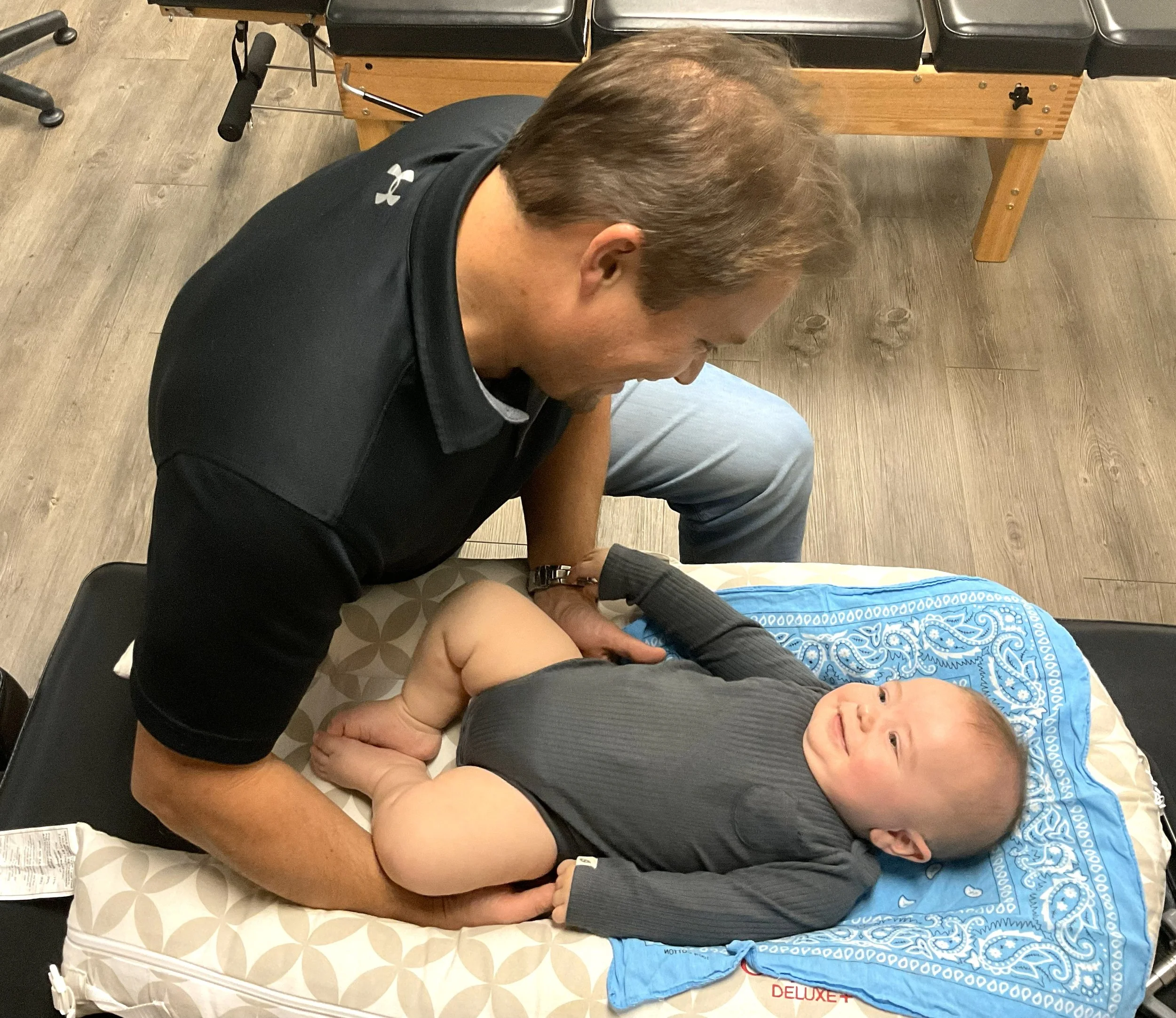
When Crew first came to New Hope Chiropractic, his first-time parents were exhausted and worried.
Crew was struggling with colic, difficulty breastfeeding, only turning his head one direction, gas pains at night, back arching, stiffness, and suspected oral ties. His parents just wanted him to be comfortable, happy, and developing normally.
Through neurological INSiGHT scans, we were able to see significant stress patterns in Crew’s nervous system — exactly what his parents had been witnessing through his symptoms.
With focused, gentle, neurologically-based chiropractic care, changes were quick and noticeable. Crew’s parents were so committed to his care that they even pushed back an upcoming out-of-state move so he could complete his care plan with us.
As the stress in his nervous system decreased, Crew’s body began to relax and function more easily. His colic resolved, breastfeeding became easier, and he started turning his head both ways. The gas pains subsided, and the back arching and stiffness faded.
Today, Crew is comfortable, happy, and developing right on track.
Stories like Crew’s remind us how powerful it can be to address the root cause — not just the visible symptoms.
What’s Really Going On: The Tie Is a Symptom
Here’s a truth that changes how we look at feeding challenges:
Neurological tone influences soft-tissue tone.
When a baby’s nervous system is stuck in a high-stress state, muscles and fascia throughout the body stay tight — including the tongue, jaw, and face.
Think of the nervous system like a car:
The sympathetic system is the gas pedal — increasing muscle tension and protection
The parasympathetic system, guided largely by the vagus nerve, is the brake — supporting calm, digestion, and coordination
When tension exists in the upper neck and cranial structures — often from birth stress — the gas pedal stays pressed, and the brake struggles to engage.
The body responds by creating tightness and restriction as a form of protection.
That’s why releasing tissue alone doesn’t always hold.
Why Some Babies Need Multiple Revisions
Many parents are told it’s normal for ties to “come back” or that multiple revisions are sometimes necessary.
But what’s often happening is this:
the tissue was released, but the nervous system tension that caused the restriction never changed.
Without addressing that deeper layer, the body continues to protect itself.
It’s not that your baby is difficult.
It’s not that you didn’t do enough.
It’s that a critical piece was missing.
Why Some Babies Develop Ties in the First Place
Not every baby develops feeding restrictions. When they do, it’s often part of a bigger picture — what we call The Perfect Storm.
Before Birth
Stress during pregnancy can influence how a baby’s nervous system develops. This is not about blame — modern life is stressful — but understanding the connection matters.
During Birth
Birth is intense. Interventions like inductions, forceps, vacuum extraction, prolonged labor, or C-sections can place physical stress on a baby’s head, neck, and nervous system — particularly where the vagus nerve exits the skull.
The vagus nerve plays a major role in:
Tongue and jaw coordination
Swallowing
Digestion
Calming and regulation
Sleep patterns
When this system is stressed, feeding challenges rarely exist alone.
Supporting the Foundation First
At New Hope Chiropractic, we look beyond the tissue and assess how the nervous system is functioning.
Through gentle, neurologically-focused chiropractic care, we support areas of tension in the cranial, upper cervical, and neurospinal system — helping the body shift out of protection and into regulation.
Some babies experience improved feeding and mobility with nervous system support alone.
When revision is needed, addressing the nervous system first often leads to smoother recovery and more lasting results.
But what parents notice most isn’t just feeding improvement — it’s calmer babies, better sleep, improved digestion, and easier days.
You Know Your Baby Best
If your instinct tells you there’s more going on, trust it.
If the traditional approach hasn’t fully helped your baby, you’re not wrong for asking deeper questions.
Sometimes our little ones just get stuck in stress mode — and when that nervous system tension is eased, everything can shift.
Ready for a Different Path Forward?
If you’re tired of addressing only part of the picture and ready to explore what may be happening at the nervous system level, New Hope Chiropractic would love to help.
If you’re not local to us, the PX Docs directory can help you find a neurologically-focused provider near you.
Your baby’s body is designed to regulate, adapt, and thrive when given the right support — and your family deserves care that looks at the whole picture. 💛
